Books in Neuroscience

Elsevier's Neuroscience collection empowers educators, researchers, and students with actionable knowledge to drive collaborative research and advancements in the field. Content covers the nervous system's intricate workings, covering branches like Affective, Behavioral, and Cognitive neuroscience to investigate the neural basis of emotions, behavior, and cognitive functions. Spanning from Molecular and Cellular Neuroscience to Developmental Neuroscience, content provides insights into brain function in health and disease.

  • Case Presentations in Neurology

    • 1st Edition
    • G. S. Venables + 2 more
    • English
    Case Presentations in Neurology presents a selection of case histories demonstrating how patients with often quite simple problems may present and to bring out aspects of their diagnosis and management. All the patients presented to the Department of Neurology including those with more obscure diagnoses. The book consists of 12 exercises, each of six cases broadly corresponding to the style of the MRCP (UK) written case history papers. Each case is set out with the history and physical findings given first. There follows either a series of questions or true/false statements on one side of the page which the reader should attempt before continuing on to the answer section on the other side. There then follows a short discussion about each case and a single reference. This book is intended for those doctors studying for higher professional qualifications such as the MRCP, although it may be of interest and use to medical students approaching their final examinations.
  • Clinical Anesthesia in Neurosurgery

    • 1st Edition
    • Elizabeth A. M. Frost
    • English
    Clinical Anesthesia in Neurosurgery, Second Edition, integrates the evolution of the field of neuroanesthesia with the major areas of neurosurgical activity to give the reader the required perspective and requisite information to help in laying the foundation for future advances as well as describing the current state of the art. The book contains 25 chapters organized into five parts. Part I presents studies on cerebral physiology and evaluation. Topics covered include cerebral circulation and metabolism, intraoperative neurophysiologic monitoring, and central nervous system effects of anesthetic agents. Part II covers neurosurgical and related procedures, such as posterior cranial fossa surgery, surgery of the spine, and peripheral nerve surgery. Part III examines central nervous system trauma including spinal cord trauma and cardiovascular effects of severe head injury. Part IV takes up postoperative and intensive care, including postanesthetic care, neurosurgical intensive care, and parenteral nutrition while Part V deals with the medical criteria and legal aspects of brain death.
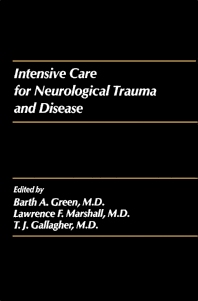
  • Intensive Care for Neurological Trauma and Disease

    • 1st Edition
    • Barth A. Green + 2 more
    • English
    Intensive Care for Neurological Trauma and Disease presents the progress in intensive care in terms of technological development on life-support and monitoring systems. This book discusses the ideal neurologic intensive care environment that is based on developments in other specialized care units. Organized into 24 chapters, this book begins with an overview of the problem of neurological trauma. This text then presents the accident scene management protocol for acute spinal cord injury as a standard to other forms of trauma system pre-hospital care. Other chapters consider the appropriate drugs and dosages for the management of status epilepticus in the newborn and older children. This book discusses as well the findings on the neurological examination and provides a framework for an etiological classification that has direct therapeutic implications. The final chapter deals with the clinical aspects, diagnosis, and management of neuromuscular diseases. This book is a valuable resource for clinicians and intensive care unit nurses.
  • The Release of Catecholamines from Adrenergic Neurons

    • 1st Edition
    • David M. Paton
    • English
    The Release of Catecholamines from Adrenergic Neurons covers the advances in understanding the mechanism of catecholamine release and other neurotransmitters from adrenergic neurons. This book is organized into four sections encompassing 18 chapters. The opening section surveys biochemical studies of the mechanism and regulation of nerve stimulation. This section examines the role of calcium, prostaglandins, and presynaptic adrenoceptors and muscarine receptors in catecholamine release. The next section describes the modification of catecholamine release by several drugs, including adrenergic neuron blocking agents, narcotic analgesics, opioid peptides, lysergic acid diethylamide, anesthetics, alcohols, and adenosine and adenine nucleotides. These topics are followed by discussions of catecholamine release induced by cations and other drugs, such as nicotinic agonists, calcium ionophores, veratridine, scorption venom, and phenethylamines. The final section deals with the biochemical assessment of peripheral adrenergic activity and the clinical pharmacology of adrenergic neuron blocking agents. This book is intended for pharmacologists, neurologists, researchers, and advanced students.
  • Principles and Practice of Restorative Neurology

    Butterworths International Medical Reviews
    • 1st Edition
    • Robert R Young + 1 more
    • English
    Principles and Practice of Restorative Neurology is a collection of topics in clinical neurology where progress through research has brought concepts of patient management. The collection emphasizes research done clinically and in experimental laboratories and attempts to discuss restorative neurology in the larger context, encompassing biology, neurobiology, and rehabilitative engineering. The book discusses the concept that neurology should be more therapeutic instead of being just diagnostic because of advances in techniques and drugs. An epidemiology of disability and the evaluation of restorative neurology are explained. The text also presents the developments in the pharmacotherapy of major neurological disorders, such as Parkinson's disease, dementia, and stroke. The use of biomechanical or rehabilitation engineering to treat impaired or lost functions in a patient is compared; the feedback mechanisms and the kinds of treatment including microsurgery, nuerostimulation methods, surgery, and molecular genetics that are applied to specific disorders are discussed extensively. The book also reviews the approaches of gene correction for disorders in the central nervous system. Finally, the future needs of neurology in terms of diagnosis and treatments are dealt with as more research, techniques, and drugs are being discovered and proved useful. The collection is intended for neurologists, neurologists in training, and other physicians whose work lies with neurological disorders. The book can also prove useful for practitioners and academicians in the fields of neurosurgery, internal medicine, psychiatry, and rehabilitation medicine.
  • Progress in Neurology and Psychiatry

    An Annual Review
    • 1st Edition
    • E. A. Spiegel
    • English
    Progress in Neurology and Psychiatry: An Annual Review, Volume 22 covers the significant advances in the understanding of neurophysiology, neuro-ophthalmology, and psychiatry. This volume is organized into four sections encompassing 33 chapters that also deal with the neurological aspects of pain and motor disorders. The first part discusses the fundamentals of neuroanatomy, general and regional neurophysiology, neuropathology, and the pharmacological aspects of the central nervous system. The second part examines the diagnosis, symptoms, and clinical features of neurological disorders. This part also explores the anatomical aspects of neuro-ophthalmology, otoneurology, and pediatric neurology. The third part reviews the surgical treatments for various neuro-related problems, including trauma, brain tumors, pain, and motor disorders. The fourth part considers the application of clinical psychiatry to the diagnosis and treatment of mental and emotional disorders, both in children and adults. This book will prove useful to neurologists, clinicians, pediatricians, and psychiatrists.
  • The Neuropsychology of Consciousness

    • 1st Edition
    • A. D. Milner + 1 more
    • English
    The Neuropsychology of Consciousness is based on a symposium entitled “Consciousness and Cognition: Neuropsychological Perspectives” held at the University of St Andrews, September 1990. The intention was to assemble a group of the major researchers at the forefront of this field. The starting point for the symposium and for the book was the widespread realization that in several areas of human cognition (e.g. visual perception, memory, language comprehension, and attention), the severe and profound impairments due to brain damage that have been described over the past 150 years are often not absolute. In particular, the use of indirect methods of testing may reveal unsuspected preservation of capacities that are undetected by more traditional direct methods. The book opens with a discussion of the epidemic of dissociations and how well the phenomena within either neuropsychology or within normal human experimental psychology map onto each other. This is followed by separate chapters on topics such as blindsight, covert visual processing in patients, face recognition and awareness following brain injury, and the relationship between the study of attention and the understanding of consciousness.
  • Neurobiology of Cytokines

    Methods in Neurosciences, Vol. 16
    • 1st Edition
    • Errol B. De Souza
    • English
    Neurobiology of Cytokines, Part A provides an overview of the effects of cytokines in the brain and in the endocrine system. The book discusses the general aspects of cytokines, including the endogenous agonists and antagonists, their receptors, their second messengers, and transport mechanisms for cytokines across the blood-brain barrier. The text also describes the anatomical localization of cytokines, cytokine receptors, and their respective mRNA in brain and in endocrine tissues. The methods for evaluating the in vivo as well as in vitro actions of cytokines on hormone secretion are also considered. The book further tackles the synthesis and release of cytokines and their central nervous system actions; and the methodology for studying the role of cytokines in human neuropathological conditions.
  • The Molecular Biology of Neurological Disease

    Butterworths International Medical Reviews
    • 1st Edition
    • Roger N. Rosenberg + 1 more
    • English
    The Molecular Biology of Neurological Disease reviews advances that have been made in understanding the molecular mechanisms of neurological disorders as well as immediate and future applications of molecular biological techniques to clinical practice. This book explores the molecular genetics of neurological disease such as muscular dystrophy, Joseph disease, and Huntington's disease, along with the mitochondrial genes implicated in such conditions. This text is comprised of 18 chapters and begins by introducing the reader to the basic principles and methods of molecular genetic techniques used in the diagnosis of neurological disease. Attention then turns to several aspects of genetic expression in the brain, including the extent to which the genome is expressed in the brain. The next chapter focuses on the visualization of polyadenylated messenger RNAs in individual cells in mammalian brain using in situ hybridization techniques, combined with immunohistochemical localization of specific proteins and neuropeptides implicated in diseases such as Alzheimer dementia. This book also discusses the molecular biology of chemical synaptic neurotransmission; proteins involved in the regulation of nervous system development; and gene expression in skeletal muscle. This text then concludes with a summary of the ""neurological gene map"" as it stands in the latter part of 1987. This book is intended for physicians who grapple with the problems of neurological disorders on a daily basis, including neurologists, neurologists in training, and those in related fields such as neurosurgery, internal medicine, psychiatry, and rehabilitation medicine.
  • Biochemistry of Brain

    • 1st Edition
    • Sudhir Kumar
    • English
    Biochemistry of Brain is a collection of articles dealing with the developments in the biochemistry of the brain. This book gives a comprehensive and critical discussion of important developments in studies concerning the above subject. This text discusses the structure, function, and metabolism of glycosphingolipids, which are related to the study of sphingolipid storage diseases. Inborn defects of metabolism are found in Gaucher's and Fabry's disease, which are characterized by lipid accumulation in the brain. Another paper reviews the chemical and genetics of critically lysosomal hydrolase deficiencies that can cause the storage of sphingolipids. This book then explains the role of myelin basic protein in lipids in vivo that the weak bonding of the protein is not a major component of myelin stability. Another paper discusses the procedures for isolating subfractions of myelin and myelin-related membranes, with some attention given on the alterations in the subfractionation of myelin in pathological hypomyelinating and demyelinating conditions. Another article discusses the biochemical and enzymatic composition of lysosomes and the biosynthesis, intracellular transport, storage, and the degradation of lysosomal constituents. This collection of papers will benefit scientists doing research in microbiology, microchemistry, molecular genetics, and neurochemistry.