Books in Toxicology

Elsevier's Toxicology collection provides essential insights for researchers and scientists into mitigating the adverse effects of contaminants on organisms, covering research, analysis, risk assessment, detection, prevention, diagnosis, and treatment of toxic exposure. Including toxicity testing, environmental toxicology it offers valuable knowledge for addressing public health and safety challenges by examining the adverse effects of contaminants on human health, animals, and the environment.

    • Anticancer Treatments and Cardiotoxicity

      Mechanisms, Diagnostic and Therapeutic Interventions
      • 1st Edition
      • Patrizio Lancellotti + 2 more
      • English
      Anticancer Treatments and Cardiotoxicity: Mechanisms, Diagnostic and Therapeutic Interventions presents cutting edge research on the adverse cardiac effects of both radiotherapy and chemotherapy, brought together by leaders in the field. Cancer treatment-related cardiotoxicity is the leading cause of treatment-associated mortality in cancer survivors and is one of the most common post-treatment issues among survivors of adult cancer. Early detection of the patients prone to developing cardiotoxicity, taking in to account the type of treatment, history and other risk factors, is essential in the fight to decrease cardiotoxic mortality. This illustrated reference describes the most effective diagnostic and imaging tools to evaluate and predict the development of cardiac dysfunction for those patients undergoing cancer treatment. In addition, new guidelines on imaging for the screening and monitoring of these patients are also presented. Anticancer Treatments and Cardiotoxicity is an essential reference for those involved in the research and treatment of cardiovascular toxicity.
    • A Comprehensive Guide to Toxicology in Nonclinical Drug Development

      • 2nd Edition
      • Ali S. Faqi
      • English
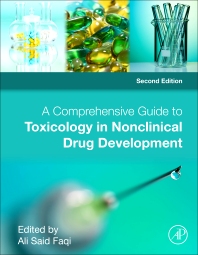
      A Comprehensive Guide to Toxicology in Nonclinical Drug Development, Second Edition, is a valuable reference designed to provide a complete understanding of all aspects of nonclinical toxicology in the development of small molecules and biologics. This updated edition has been reorganized and expanded to include important topics such as stem cells in nonclinical toxicology, inhalation and dermal toxicology, pitfalls in drug development, biomarkers in toxicology, and more. Thoroughly updated to reflect the latest scientific advances and with increased coverage of international regulatory guidelines, this second edition is an essential and practical resource for all toxicologists involved in nonclinical testing in industry, academic, and regulatory settings.
    • Chemotherapy

      Proceedings of the 7th International Congress of Pharmacology, Paris, 1978
      • 1st Edition
      • M. Adolphe
      • English
      Advances in Pharmacology and Therapeutics, Volume 10: Chemotherapy covers the proceedings of the 7th International Congress of Pharmacology. The title presents papers that detail the advancement of pharmacological research in chemotherapy. The text first covers the chemotherapy of schistosomiasis. Next, the selection presents the trends in malaria and cancer chemotherapy, along with their pharmacological research. The text also details the use of cell cultures as tools in pharmacological investigations. The book will be of great interest to pharmacologists and oncologists.
    • Perspectives in Basic and Applied Toxicology

      • 1st Edition
      • Bryan Ballantyne
      • English
      Perspectives in Basic and Applied Toxicology features a collection of essays on various aspects of toxicology. It aims to relate fundamental knowledge of toxicology to its application in assessing relevance of that information to the causation of adverse health effects, predicting hazardous situations, defining protective and precautionary measures, and the recognition and management of intoxication in humans. Another objective of this volume is to encourage those with responsibility for the training of toxicologists to instill a greater concern about ethical and moral issues as fundamental to the practice of toxicology as a profession with wide-ranging social implications. This book is organized into 14 chapters. The coverage of these chapters include assessment of chemical hazards in the workplace, the relation between animal studies and epidemiology in the context of industrial toxicology, carcinogenicity testing in animals, and biochemical evaluation of neurotoxicity. This book will be of interest to undergraduate and graduate toxicologists, pharmacologists, physicians, industrial hygienists, and other health professionals.
    • Alcohol, Drugs, Genes and the Clinical Laboratory

      An Overview for Healthcare and Safety Professionals
      • 1st Edition
      • Amitava Dasgupta
      • English
      Alcohol, Drugs, Genes and the Clinical Laboratory provides an overview and quick reference to genetic relationships and clinical laboratory information related to the serious public health issue of alcohol and drug abuse. Written in a clear and concise manner, this book discusses the necessary information for health and safety professionals working in public health to learn about complex issues quickly to better help their patients, employees, and others affected by alcohol and drug abuse. Alcohol, Drugs, Genes and the Clinical Laboratory covers the important aspects of drugs and alcohol abuse including genetic aspects along with laboratory methods for analysis of alcohol and abused drugs with emphasis on false positive test results. The book is helpful to healthcare professionals, such as pathologists who oversee alcohol and drug testing, emergency room physicians, family practice physicians who are first healthcare professionals who identify patients susceptible to drug and alcohol abuse, and psychiatrists involved with drug and alcohol rehabilitation programs. It will also be useful to safety professionals who have to assess individuals for workplace responsibilities, ranging from police and recruitment to occupational safety and occupational medicine and public health officials.
    • Neurotoxicity of Nanomaterials and Nanomedicine

      • 1st Edition
      • Xinguo Jiang + 1 more
      • English
      Neurotoxicity of Nanomaterials and Nanomedicine presents an overview of the exciting research in neurotoxicity and nanomaterials. Nanomaterials have been extensively used in medicine, including diagnosis probes, drug carriers, and embedded materials. While some have been approved for clinical use, most nanomaterials are waiting to be transferred from lab to clinic. However, the toxicity is a main barrier that restricts the translation. This comprehensive book includes chapters on the most commonly used individual nanoparticles, with information on the applications, neurotoxicity, and related mechanisms of each, providing the most in-depth and current information available. The book examines the pathways that nanomaterials enter into, and eliminate, from the brain, along with the strategies that could reduce the neurotoxicity of nanomaterials. Providing a background to the subject, detailed information, and ideas for future directions in research, the book is essential for students and researchers in toxicology, and for those in medicine, neurology, pharmacology, pharmaceutical science, and materials science who are researching nanomaterials.
    • Fundamentals of Toxicology

      Essential Concepts and Applications
      • 1st Edition
      • PK Gupta
      • English
      Fundamentals of Toxicology: Essential Concepts and Applications provides a crisp, easy-to-understand overview of the most important concepts, applications, and ideas needed to learn the basics of toxicology. Written by a pre-eminent toxicologist with over five decades of teaching experience, this comprehensive resource offers the hands-on knowledge needed for a strong foundation in the wide field of toxicology. Fundamentals of Toxicology includes a clear structure divided into five units to assist learning and understanding. The first unit provides extensive coverage on the background of toxicology including commonly used definitions and historical perspective, while following units cover: basic concepts; regulatory requirements and good laboratory practices, including types of toxicology testing and evaluation; toxic agents and adverse effects on health; and analytical, forensic, and diagnostic toxicology. This is an essential book for advanced students in toxicology and across the biomedical sciences, life sciences, and environmental sciences who want to learn the concepts of toxicology, as well as early researchers needing to refresh outside of their specialty.
    • The Evaluation of Toxicological Data for the Protection of Public Health

      Proceedings of the International Colloquium, Luxembourg, December 1976
      • 1st Edition
      • W. J. Hunter + 1 more
      • English
      The Evaluation of Toxicological Data for the Protection of Public Health: Proceedings of the International Colloquium, Luxembourg, December 1976 focuses on the review of toxicological tests and methods used in toxicological evaluation of chemicals and reconsideration of these procedures in identifying decision-making processes involved in the protection of public health. The selection first discusses reviews of toxicological tests, including introductory remarks and comments on acute toxicity; problems associated with the testing of environmental mutagens; and the testing of carcinogenic potentials. The publication also examines the uncertainties related to the evaluation of the health hazards of environmental chemicals from toxicological data and epidemiological monitoring of indices of chemical hazards. The book takes a look at safety factors and their application in toxicological evaluation; ecotoxicological approaches for the protection of environment and health; and use of biological materials as environmental pollution gauges. The text also discusses acute toxicity, teratogenic effects of pollutants, and examples of ecotoxicological research. The selection is a dependable source of data for readers interested in the evaluation of toxicological data relative to the protection of public health.
    • Pharmacology of Pain

      Proceedings of the First International Pharmacological Meeting, Stockholm, 22-25 August, 1961
      • 1st Edition
      • R. K. S. Lim + 2 more
      • English
      Pharmacology of Pain, Volume 9 presents the proceedings of the 3rd International Pharmacological Meetings held in Sao Paulo in 1966. The book includes papers on the mediators of pain; proteolytic enzymes as mediators of pain; and desensitization with capsaicin and related acylamides as a tool for studying the function of pain receptors. The text also covers the sensitization of nociceptors by 5-hydroxytryptamine in man; the possible role of serotonin in affective component of pain behavioral reaction in the rat; and the use of pain induced functional impairment for assessing analgesic action. Papers on the clinical pharmacology of analgesics and analgesic antagonists; behavioral mechanisms of human pain; and central nervous mechanisms involved in pain and analgesia are also considered. The book further tackles the neuropharmacology of pain and analgesia; the interrelationship of cortical and subcortical pain systems; and the interaction of fast- and slow-conducting fiber systems involved in pain and analgesia.
    • Fungal Toxins

      A Comprehensive Treatise
      • 1st Edition
      • Alex Ciegler + 2 more
      • English
      Microbial Toxins, Volume VI: Fungal Toxins covers information on the evaluation of the chemical, biological, and biomedical aspects of the fungal toxins. The book discusses the historical structure chemistry, production, analysis, detoxification, biosynthesis, pharmacology, toxicology, and molecular biochemistry of aflatoxins and related compounds. The text also describes the isolation, analysis, production, chemistry, biological effects, and biogenesis of the ochratoxins, as well as the bioproduction, biosynthesis, and chemical properties of misclellaneous Aspergillus toxins. Various species of storage fungi, including yellowed rice toxins, luteoskyrin and related compounds, chlorine-containing compounds, citrinin, and citreoviridin are also considered. The book further tackles the physical and chemical properties and the biological activity of the rubratoxins; the biosynthesis and biochemical effects of patulin, penicillic acid, and other carcinogenic lactones; as well as the structure, production, biosynthesis, and biological effects of cyclopiazonic acid and related toxins. The text also encompasses bioproduction, properties, chemical structure, and biological activity of miscellaneous Penicillium toxins. Microbiologists, biochemists, epidemiologists, pharmacologists, toxicologists, medical students and people involved in other related fields will find the book useful.