Books in Life sciences

  • Advances in Food and Nutrition Research

    • 1st Edition
    • Volume 70
    • English
    Advances in Food and Nutrition Research recognizes the integral relationship between the food and nutritional sciences and brings together outstanding and comprehensive reviews that highlight this relationship. Contributions detail scientific developments in the broad areas of food science and nutrition and are intended to provide those in academia and industry with the latest information on emerging research in these constantly evolving sciences.
  • Advances in Genetics

    • 1st Edition
    • Volume 82
    • English
    The field of genetics is rapidly evolving, and new medical breakthroughs are occurring as a result of advances in our knowledge of genetics. This series continually publishes important reviews of the broadest interest to geneticists and their colleagues in affiliated disciplines.
  • Fighting Multidrug Resistance with Herbal Extracts, Essential Oils and Their Components

    • 1st Edition
    • Mahendra Rai + 1 more
    • English
    Fighting Multidrug Resistance with Herbal Extracts, Essential Oils and their Components offers scientists a single source aimed at fighting specific multidrug-resistant (MDR) microorganisms such as bacteria, protozoans, viruses and fungi using natural products. This essential reference discusses herbal extracts and essential oils used or under investigation to treat MDR infections, as well as those containing antimicrobial activity that could be of potential interest in future studies against MDR microorganisms. The need to combat multidrug-resistant microorganisms is an urgent one and this book provides important coverage of mechanism of action, the advantages and disadvantages of using herbal extracts, essential oils and their components and more to aid researchers in effective antimicrobial drug discovery
  • Engineered Biomimicry

    • 1st Edition
    • Akhlesh Lakhtakia + 1 more
    • English
    Engineered Biomimicry covers a broad range of research topics in the emerging discipline of biomimicry. Biologically inspired science and technology, using the principles of math and physics, has led to the development of products as ubiquitous as Velcroâ„¢ (modeled after the spiny hooks on plant seeds and fruits). Readers will learn to take ideas and concepts like this from nature, implement them in research, and understand and explain diverse phenomena and their related functions. From bioinspired computing and medical products to biomimetic applications like artificial muscles, MEMS, textiles and vision sensors, Engineered Biomimicry explores a wide range of technologies informed by living natural systems. Engineered Biomimicry helps physicists, engineers and material scientists seek solutions in nature to the most pressing technical problems of our times, while providing a solid understanding of the important role of biophysics. Some physical applications include adhesion superhydrophobicity and self-cleaning, structural coloration, photonic devices, biomaterials and composite materials, sensor systems, robotics and locomotion, and ultra-lightweight structures.
  • Transport in Biological Media

    • 1st Edition
    • Sid M. Becker + 1 more
    • English
    Transport in Biological Media is a solid resource of mathematical models for researchers across a broad range of scientific and engineering problems such as the effects of drug delivery, chemotherapy, or insulin intake to interpret transport experiments in areas of cutting edge biological research. A wide range of emerging theoretical and experimental mathematical methodologies are offered by biological topic to appeal to individual researchers to assist them in solving problems in their specific area of research. Researchers in biology, biophysics, biomathematics, chemistry, engineers and clinical fields specific to transport modeling will find this resource indispensible.
  • Proteomic and Metabolomic Approaches to Biomarker Discovery

    • 1st Edition
    • Haleem J. Issaq
    • English
    Proteomic and Metabolomic Approaches to Biomarker Discovery demonstrates how to leverage biomarkers to improve accuracy and reduce errors in research. Disease biomarker discovery is one of the most vibrant and important areas of research today, as the identification of reliable biomarkers has an enormous impact on disease diagnosis, selection of treatment regimens, and therapeutic monitoring. Various techniques are used in the biomarker discovery process, including techniques used in proteomics, the study of the proteins that make up an organism, and metabolomics, the study of chemical fingerprints created from cellular processes. Proteomic and Metabolomic Approaches to Biomarker Discovery is the only publication that covers techniques from both proteomics and metabolomics and includes all steps involved in biomarker discovery, from study design to study execution. The book describes methods, and presents a standard operating procedure for sample selection, preparation, and storage, as well as data analysis and modeling. This new standard effectively eliminates the differing methodologies used in studies and creates a unified approach. Readers will learn the advantages and disadvantages of the various techniques discussed, as well as potential difficulties inherent to all steps in the biomarker discovery process. A vital resource for biochemists, biologists, analytical chemists, bioanalytical chemists, clinical and medical technicians, researchers in pharmaceuticals, and graduate students, Proteomic and Metabolomic Approaches to Biomarker Discovery provides the information needed to reduce clinical error in the execution of research.
  • Bioenergetics

    • 4th Edition
    • David G. Nicholls
    • English
    Extensively revised, the fourth edition of this highly successful book takes into account the many newly determined protein structures that provide molecular insight into chemiosmotic energy transduction, as well as reviewing the explosive advances in 'mitochondrial physiology'-the role of the mitochondria in the life and death of the cell. Covering mitochondria, bacteria and chloroplasts, the fourth edition of Bioenergetics provides a clear and comprehensive account of the chemiosmotic theory and its many applications. The figures have been carefully designed to be memorable and to convey the key functional and mechanistic information. Written for students and researchers alike, Bioenergetics is the most well-known, current and respected text on chemiosmotic theory and membrane bioenergetics available.
  • Challenging Behavior

    • 1st Edition
    • Volume 44
    • English
    International Review of Research in Developmental Disabilities is an ongoing scholarly look at research into the causes, effects, classification systems, syndromes, etc. of developmental disabilities. Contributors come from wide-ranging perspectives, including genetics, psychology, education, and other health and behavioral sciences. Volume 44 of the series offers chapters on challenging behavior.
  • The Future of Drug Discovery

    Who Decides Which Diseases to Treat?
    • 1st Edition
    • Tamas Bartfai + 1 more
    • English
    The Future of Drug Discovery: Who decides which diseases to treat? provides a timely and detailed look at the efforts of the pharmaceutical industry and how they relate, or should relate, to societal needs. The authors posit that as a result of increasing risk aversion and accelerated savings in research and development, the industry is not developing drugs for increasingly prevalent diseases, such as Alzheimer’s disease, untreatable pain, antibiotics and more. This book carefully exposes the gap between the medicines and therapies we need and the current business path. By analyzing the situation and discussing prospects for the next decade, the The Future of Drug Discovery is a timely book for all those who care about the development needs for drugs for disease.
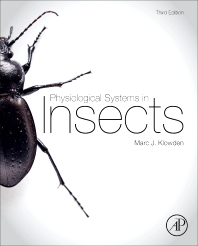
  • Physiological Systems in Insects

    • 3rd Edition
    • Marc J. Klowden
    • English
    Physiological Systems in Insects discusses the roles of molecular biology, neuroendocrinology, biochemistry, and genetics in our understanding of insects. All chapters in the new edition are updated, with major revisions to those covering swiftly evolving areas like endocrine, developmental, behavioral, and nervous systems. The new edition includes the latest details from the literature on hormone receptors, behavioral genetics, insect genomics, neural integration, and much more. Organized according to insect physiological functions, this book is fully updated with the latest and foundational research that has influenced understanding of the patterns and processes of insects and is a valuable addition to the collection of any researcher or student working with insects. There are about 10 quintillion insects in the world divided into more than one million known species, and some scientists believe there may be more than 30 million species. As the largest living group on earth, insects can provide us with insight into adaptation, evolution, and survival. The internationally respected third edition of Marc Klowden's standard reference for entomologists and researchers and textbook for insect physiology courses provides the most comprehensive analysis of the systems that make insects important contributors to our environment.