Books in Fats and oils

  • Oxidative Stability and Shelf Life of Foods Containing Oils and Fats

    • 1st Edition
    • Min Hu + 1 more
    • English
    Oxidative Stability and Shelf Life of Foods Containing Oils and Fats focuses on food stability and shelf life, both important factors in the improvement and development of food products. This book, relevant for professionals in the food and pet food industries, presents an evaluation of methods for studies on the oxidative stability and shelf life of bulk oils/fats, fried oils and foods, food emulsions, dried foods, meat and meat products, and seafood in food and pet food.
  • Functional Dietary Lipids

    Food Formulation, Consumer Issues and Innovation for Health
    • 1st Edition
    • Thomas A. B. Sanders
    • English
    Functional Dietary Lipids: Food Formulation, Consumer Issues and Innovation for Health discusses this important component of the human diet and the ways it plays an essential functional role in many foods. The book covers the functionality and nutritional benefits of dietary fat in food in terms of formulation, manufacturing, and innovation for health. After an introduction by the editor reviewing the role of fats in the human diet, the book discusses the chemistry of edible fats, manufacturing issues, including the replacement of trans-fatty acids in food, fat reformulation for calorie reduction, thermal stability of fats, and the flavor and functional texture and melting characteristics of fats in food. Subsequent chapters address the effect of dietary lipid intake on various health issues and the potential health benefits of bioactive compounds in dietary lipids, with final sections discussing issues that affect the consumer relationship with fat, such as regulation, marketing, and health claims.
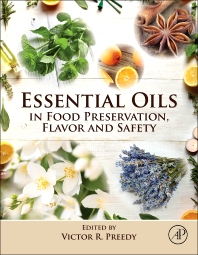
  • Essential Oils in Food Preservation, Flavor and Safety

    • 1st Edition
    • Victor R. Preedy
    • English
    Essential Oils in Food Preservation, Flavor and Safety discusses the major advances in the understanding of the Essential Oils and their application, providing a resource that takes into account the fact that there is little attention paid to the scientific basis or toxicity of these oils. This book provides an authoritative synopsis of many of the complex features of the essential oils as applied to food science, ranging from production and harvesting, to the anti-spoilage properties of individual components. It embraces a holistic approach to the topic, and is divided into two distinct parts, the general aspects and named essential oils. With more than 100 chapters in parts two and three, users will find valuable sections on botanical aspects, usage and applications, and a section on applications in food science that emphasizes the fact that essential oils are frequently used to impart flavor and aroma. However, more recently, their use as anti-spoilage agents has been extensively researched.
  • Olive and Olive Oil Bioactive Constituents

    • 1st Edition
    • Dimitrios Boskou
    • English
    The market is flooded with products posing as elixirs, supplements, functional foods, and olive oil alternatives containing phenols obtained from multiple olive sources. This technically-oriented book will be of value to nutritionists and researchers in the biosciences. It unravels the body of science pertaining to olive minor constituents in relation to new chemical knowledge, technological innovations, and novel methods of recovery, parallel to toxicology, pharmacology, efficacy, doses, claims, and regulation. Topics include: the biological importance of bioactive compounds present in olive products; developments and innovations to preserve the level of bioactives in table olives and olive oil; and importance of variety, maturity, processing of olives, storage, debittering of olives and table olives as a valuable source of bioactive compounds.
  • Green Vegetable Oil Processing

    Revsied First Edition
    • 1st Edition
    • Walter E. Farr + 1 more
    • English
    Alternative green food processing technologies have gained much technical and industrial attention in recent years as a potential means of reducing costs and promoting consumer awareness of corporate environmental responsibility. However, utilizing green principles is now becoming an effective business approach to enhance vegetable oil processing profitability. Two years have passed since the first edition of Green Vegetable Oil Processing was published. The Revised First Edition includes much of the content of the first edition, but incorporates updated data, details, images, figures, and captions. This book addresses alternative green technologies at various stages of oilseed and vegetable oil processing. This includes oil extraction technologies such as expeller, aqueous and supercritical methods, and green modifications of conventional unit operations such as degumming, refining, bleaching, hydrogenation, winterizing/dewaxing... fractionation, and deodorization. While most chapters describe soy oil processing, the techniques described equally applicable to oils and fats in general.
  • Food Enrichment with Omega-3 Fatty Acids

    • 1st Edition
    • Charlotte Jacobsen + 3 more
    • English
    Omega-3 fatty acids provide many health benefits, from reducing cardiovascular disease to improving mental health, and consumer interest in foods enriched with omega-3 fatty acids is increasing. Formulating a product enriched with these fatty acids that is stable and has an acceptable flavour is challenging. Food enrichment with omega-3 fatty acids provides an overview of key topics in this area.Part one, an introductory section, reviews sources of omega-3 fatty acids and their health benefits. Chapters in part two explore the stabilisation of both fish oil itself and foods enriched with omega-3 fatty acids. Part three focuses on the fortification of different types of foods and beverages with omega-3 fatty acids, including meat products, by the modification of animal diets and other methods, infant formula and baked goods. Finally, part four highlights new directions in the field and discusses algal oil as a source of omega-3 fatty acids and labelling and claims in foods containing omega-3 fatty acids.Food enrichment with omega-3 fatty acids is a standard reference for professionals in the functional foods industry involved with research, development and quality assessment and for researchers in academia interested in food lipids, oxidation and functional foods.
  • Palm Oil

    Production, Processing, Characterization, and Uses
    • 1st Edition
    • Oi-Ming Lai + 2 more
    • English
    Palm Oil: Production, Processing, Characterization, and Uses serves as a rich source of information on the production, processing, characterization and utilization of palm oil and its components. It also includes several topics related to oil palm genomics, tissue culture and genetic engineering of oil palm. Physical, chemical and polymorphic properties of palm oil and its components as well as the measurement and maintenance of palm oil quality are included and may be of interest to researchers and food manufacturers. General uses of palm oil/kernel oil and their fractions in food, nutritional and oleochemical products are discussed as well as the potential use of palm oil as an alternative to trans fats. Some attention is also given to palm biomass, bioenergy, biofuels, waste management, and sustainability.
  • Phospholipid Technology and Applications

    • 1st Edition
    • F. D. Gunstone
    • English
    Phospholipid technology and applications is an essential reference for technologists developing food and cosmetics products, scientists researching phospholipids in biological and food systems, technologists in fats and oils refining, and scientists developing drugs and drug delivery systems and carriers.The major source of phospholipids is the lecithin recovered during degumming of vegetable oils, particularly soybean oil. This crude material finds uses in its own right but can be purified through a series of processes which eventually lead to individual phospholipid classes such as phosphatidylcholines... is widely accepted that oil and water do not mix but there are several areas in science and technology where these two distinct phases must coexist in stable emulsions. This is achieved by admixture of amphiphilic molecules of which the phospholipids are important natural examples. Today, phospholipids find many uses in the food industry and in other industries which exploit the amphiphilic nature of these compounds. Further, there are now important procedures by which their amphiphilicity can be optimized for different uses.The early chapters in this book are devoted to the more common glycerol-based phospholipids and cover their structure, source, composition, modification by chemical and enzymatic methods, their physical, chemical, and nutritional properties, and their major uses. The final chapter is devoted to another kind of phospholipid, the sphingolipids, in which there is a growing interest.
  • Modifying Lipids for Use in Food

    • 1st Edition
    • F. D. Gunstone
    • English
    Oils and fats have a major impact on the nutritional and sensory quality of many foods. Food manufacturers must often modify lipid components or ingredients in food to achieve the right balance of physical, chemical and nutritional properties. Modifying lipids for use in foods reviews the range of lipids available, techniques for their modification and how they can be used in food products.Part one reviews vegetable, animal, marine and microbial sources of lipids and their structure. The second part of the book discusses the range of techniques for modifying lipids such as hydrogenation, fractionation and interesterification. Finally, part three considers the wide range of applications of modified lipids in such areas as dairy and bakery products, confectionary and frying oils.With its distinguished editor and international range of contributors, Modifying lipids for use in foods is a standard reference for dairy and other manufacturers using modified lipids.
  • Improving the Fat Content of Foods

    • 1st Edition
    • C Williams + 1 more
    • English
    As health problems such as obesity, heart disease and diabetes increase in many developed and developing countries, the food industry has come under mounting pressure to improve the nutritional quality of its products. Particular attention has focused on the health problems associated with saturated fats in food and on the potential health benefits of increasing monounsaturated and polyunsaturated fat content. Summarising key research in this field, this important collection reviews both the influence of dietary fats on health and practical strategies for improving the fat content of food products.Part one reviews the evidence on the links between dietary fats and health. There are chapters on the links between saturated fatty acid intake, obesity, coronary heart disease, diabetes and cancer, as well as the health benefits of monounsaturated fats, polyunsaturated fatty acids (PUFAs) and conjugated linoleic acids (CLAs). Part two then discusses ways of reducing saturated fatty acids in food. It includes chapters on the role of lipids on food quality and ways of gaining consumer acceptance of low-fat foods, as well as chapters on improving fatty acid composition in dairy products and milk and the use of fat replacers. The final part of the book reviews ways of using polyunsaturated and other modified fatty acids in food products. It includes chapters on developing and using PUFAs as functional ingredients and ways of improving the sensory quality of products incorporating modified fats.With its distinguished editors and international team of contributors, Improving the fat content of foods is a standard reference for nutritionists and product developers in the food industry.