
Books in Chemical engineering

The Chemical Engineering collection offers content that combines research with foundational knowledge, practical information, methods and case studies, in a variety of areas, including biochemical engineering, catalysis, filtration & separation, colloids & surface chemistry, electrochemical engineering, energy & transport processes, materials chemistry, metallurgy, process engineering, safety & reliability, sustainable & environmental, to help chemical engineers address the challenges we face today, including climate change, global warming, health and nutrition, and alternative energy.
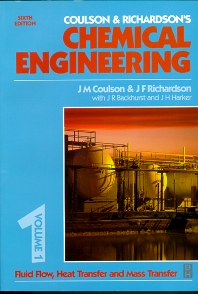
  • Chemical Engineering Volume 1

    Fluid Flow, Heat Transfer and Mass Transfer
    • 6th Edition
    • J R Backhurst + 3 more
    • R.P. Chhabra
    • English
    Coulson and Richardson's classic series provides the student with an account of the fundamentals of chemical engineering and constitutes the definitive work on the subject for academics and practitioners. Each book provides clear explanations of theory and thorough coverage of practical applications, supported by numerous worked examples and problems. Thus, the text is designed for students as well as being comprehensive in coverage.This volume covers the three main transport process of interest to chemical engineers - momentum transfer (fluid flow), heat transfer and mass transfer and the relationships between them. The concluding chapter covers an application where each of these processes is occurring simultaneously - water cooling and humidification. The topics covered form the theoretical basis for much of the material in the later volumes of the series.
  • Advances in Catalysis

    • 1st Edition
    • Volume 44
    • English
    Since 1948, this series has filled the gap between the papers that report on and the textbooks that teach in the diverse areas of catalysis research. The editors of and contributors to Advances in Catalysis are dedicated to recording progress in this area. Each volume of Advances in Catalysis contains articles covering a subject of broad interest.Advances in Catalysis 44 reflects the expanding impact of experimental surface characterization on the understanding of catalysis. The catalysts emphasized here are representative of the complexity of today's technology; examples include catalysts for hydrocarbon re-forming, automobile exhaust conversion, and hydroprocessing to make clean-burning fossil fuels. This volume contains three obituaries recognizing the major contributions of Dr. Werner O. Hagg, Dr. Charles Kemball, and Dr. John Turkevich.
  • Advances in Chemical Engineering

    • 1st Edition
    • Volume 25
    • John H. Seinfeld + 1 more
    • James Wei
    • English
  • Probabilistic Safety Assessment in the Chemical and Nuclear Industries

    • 1st Edition
    • Ralph Fullwood
    • English
    Probabilistic Safety Analysis (PSA) determines the probability and consequences of accidents, hence, the risk. This subject concerns policy makers, regulators, designers, educators and engineers working to achieve maximum safety with operational efficiency. Risk is analyzed using methods for achieving reliability in the space program. The first major application was to the nuclear power industry, followed by applications to the chemical industry. It has also been applied to space, aviation, defense, ground, and water transportation. This book is unique in its treatment of chemical and nuclear risk.Problems are included at the end of many chapters, and answers are in the back of the book. Computer files are provided (via the internet), containing reliability data, a calculator that determines failure rate and uncertainty based on field experience, pipe break calculator, event tree calculator, FTAP and associated programs for fault tree analysis, and a units conversion code. It contains 540 references and many referrals to internet locations for information.
  • Protecting Personnel at Hazardous Waste Sites

    • 3rd Edition
    • William Martin + 1 more
    • English
    The latest edition of Protecting Personnel at Hazardous Waste Sites brings together a wide range of occupational safety and health recommendations and practices directly applying to hazardous waste site cleanups. In addition to providing the most current information on maximum protection for cleanup personnel, this book is a practical, authoritative guide for those involved in cleanup operations. The completely updated third edition cites the newest OSHA and NIOSH recommendations that have developed over the past decade and explores the new federal emphasis in hazardous waste site cleanups such as radiation safety, toxicology, unexploded ordnance, OSHA training, EPA training, and site health and safety plans.
  • Instrumentation for Fluid Particle Flow

    • 1st Edition
    • S.L. Soo
    • English
    Some of the most original and productive research specialists in the field of particle-fluid flow systems are assembled in this book, which is an important and current reference volume. The book focuses on methods of measurement and options for engineers
  • Chemical Engineering Volume 6

    Chemical Engineering Design
    • 3rd Edition
    • Ray Sinnott
    • English
    Coulson and Richardson's classic series provides the student with an account of the fundamentals of chemical engineering and constitutes the definitive work on the subject for academics and practitioners. This volume covers the application of chemical engineering principles to the design of chemical processes and equipment.After an introductory chapter on the nature and methodology of the design process and its application to the design of chemical manufacturing processes - subsequent chapters cover process design and detail, safety and loss prevention, equipment selection, costings and flow sheets in depth. Later chapters cover the detailed design for equipment for separation processes and heat exchange. The mechanical design of process equipment is also included and a chapter on more general site considerations closes the book.
  • Catalyst Deactivation 1999

    • 1st Edition
    • Volume 126
    • G.F. Froment + 1 more
    • English
    Studies in catalyst deactivation play a major role in the identification of the real catalytic system, in particular, the structure and texture of the solid, which is often in a metastable state, as it is operated in the industrial reactor. These studies also allow the identification of the experimental conditions which preserve this active and selective state. This is crucial for a real understanding of catalysts and catalysis. Another area of catalytic science concerns reactions kinetics, which, if properly determined, are of paramount importance in the elucidation of mechanisms. The behavior of the kinetics during aging and deactivation and an accurate modeling of the evolution of activity and selectivity are essential information for the process performance. These are just two typical examples, but quite generally, the science of catalyst deactivation is going to be more oriented to fundamental issues.
  • Advances in Catalysis

    Cumulative Subject and Author Indexes and Tables of Contents for Volumes 1-42
    • 1st Edition
    • Volume 43
    • English
    Since 1948, this series has bridged the gap between the papers that report and the textbooks that teach in the diverse areas of catalysis research. The editors of and contributors to Advances in Catalysis are dedicated to recording progress in this area. This volume contains cumulative subject and author indexes and tables of contents for volumes 1-42.
  • Handbook of Hazardous Chemical Properties

    • 1st Edition
    • Nicholas P Cheremisinoff
    • English
    This volume provides extensive health (toxicological) and safety handling information and data on over 1,000 chemicals of commercial and industrial importance. This volume will provide extensive health (toxicological) and safe-handling information and data on more than 1000 chemicals of commercial and industrial importance. It provides chemical specific information pertinent to safe handling and transportation of chemicals, worker protection, emergency response information to address spills, explosions on fire situations, and chemical stability/reactivity data. It is designed as a standard reference handbook for chemical engineers, safety engineers, toxicologists, fire safety specialists, chemists, laboratory and plant technicians.