Books in Life sciences

Elsevier's Life Sciences collection helps researchers get comprehensive coverage and up-to-date information on the study of living organisms, their processes, and interrelationships, spanning disciplines like biology, genetics, and biochemistry, and addressing emerging trends such as genomics, biotechnology, and sustainability, essential for advancing knowledge and driving innovation in the field.

  • Nanobiotechnology

    Inorganic Nanoparticles vs Organic Nanoparticles
    • 1st Edition
    • Volume 4
    • English
    Nanotechnology is considered the next big revolution in medicine and biology. For the past 20 years, research groups have been involved in the development of new applications of novel nanomaterials for biotechnological applications. Nanomaterials are also becoming increasingly important in medical applications, with new drugs and diagnostic tools based on nanotechnology. Every year, hundreds of new ideas using nanomaterials are applied in the development of biosensors. An increasing number of new enterprises are also searching for market opportunities using these technologies.Nanomat... for biotechnological applications is a very complex field. Thousands of different nanoparticles could potentially be used for these purposes. Some of them are very different; their synthesis, characterization and potentiality are very diverse. This book aims to establish a route guide for non-erudite researchers in the field, showing the advantages and disadvantages of the different kind of nanomaterials. Particular attention is given to the differences, advantages and disadvantages of inorganic nanoparticles versus organic nanoparticles when used for biotechnological applications. A tutorial introduction provides the basis for understanding the subsequent specialized chapters.
  • Immobilized Affinity Ligand Techniques

    • 1st Edition
    • A. Krishna Mallia + 2 more
    • English
    This book is a practical guide to the preparation and use of immobilized affinity ligands for purification, catalysis, and analysis. Special emphasis is given to immunochemical techniques including antibody isolation, preparation of antibody fragments using immobilized enzymes, and immunoaffinity chromatography. The book provides easy-to-follow, well-tested protocols to allow the uninitiated to use these techniques to the maximum advantage with minimum hassle. In addition, it shows researchers how to save money by making their own optimized affinity supports.
  • RNA Helicases

    • 1st Edition
    • Volume 511
    • English
    This volume of Methods in Enzymology aims to provide a reference for the diverse, powerful tools used to analyze RNA helicases. The contributions in this volume cover the broad scope of methods in the research on these enzymes. Several chapters describe quantitative biophysical and biochemical approaches to study molecular mechanisms and conformational changes of RNA helicases. Further chapters cover structural analysis, examination of co-factor effects on several representative examples, and the analysis of cellular functions of select enzymes. Two chapters outline approaches to the analysis of inhibitors that target RNA helicases.
  • Recent Advances in Nutrigenetics and Nutrigenomics

    • 1st Edition
    • Volume 108
    • English
    This volume of Progress in Molecular Biology and Translational Science covers the recent advances in the expanding fields of nutrigenetics and nutrigenomics. Forty authors from eight countries have contributed to the publication, representing the most cutting-edge research available.
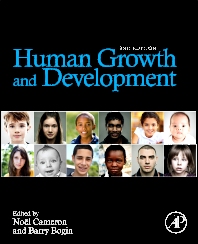
  • Human Growth and Development

    • 2nd Edition
    • Noel Cameron + 1 more
    • English
    Offering a study of biological, biomedical and biocultural approaches, the second edition of Human Growth and Development is a valued resource for researchers, professors and graduate students across the interdisciplinary area of human development. With timely chapters on obesity, diet / lifestyle, and genetics, this edition is the only publication offering a biological, biomedical and biocultural approach. The second edition of Human Growth and Development includes contributions from the well-known experts in the field and is the most reputable, comprehensive resource available.
  • International Review of Cell and Molecular Biology

    • 1st Edition
    • Volume 297
    • Kwang W. Jeon
    • English
    International Review of Cell and Molecular Biology presents current advances and comprehensive reviews in cell biology--both plant and animal. Articles address structure and control of gene expression, nucleocytoplasmic interactions, control of cell development and differentiation, and cell transformation and growth.
  • Principles and Practice of Clinical Research

    • 3rd Edition
    • John I. Gallin + 1 more
    • English
    The third edition of this innovative work again provides a unique perspective on the clinical discovery process by providing input from experts within the NIH on the principles and practice of clinical research. Molecular medicine, genomics, and proteomics have opened vast opportunities for translation of basic science observations to the bedside through clinical research. As an introductory reference it gives clinical investigators in all fields an awareness of the tools required to ensure research protocols are well designed and comply with the rigorous regulatory requirements necessary to maximize the safety of research subjects. Complete with sections on the history of clinical research and ethics, copious figures and charts, and sample documents it serves as an excellent companion text for any course on clinical research and as a must-have reference for seasoned researchers.
  • Regenerative Biology and Medicine

    • 2nd Edition
    • David L. Stocum
    • English
    Regenerative Biology and Medicine, Second Edition — Winner of a 2013 Highly Commended BMA Medical Book Award for Medicine — discusses the fundamentals of regenerative biology and medicine. It provides a comprehensive overview, which integrates old and new data into an ever-clearer global picture. The book is organized into three parts. Part I discusses the mechanisms and the basic biology of regeneration, while Part II deals with the strategies of regenerative medicine developed for restoring tissue, organ, and appendage structures. Part III reflects on the achievements of regenerative biology and medicine; future challenges; bioethical issues that need to be addressed; and the most promising developments in regenerative medicine. The book is designed for multiple audiences: undergraduate students, graduate students, medical students and postdoctoral fellows, and research investigators interested in an overall synthesis of this field. It will also appeal to investigators from fields not directly related to regenerative biology and medicine, such as chemistry, informatics, computer science, mathematics, physics, and engineering.
  • Advances in Microbial Physiology

    • 1st Edition
    • Volume 60
    • English
    Advances in Microbial Physiology is one of the most successful and prestigious series from Academic Press, an imprint of Elsevier. It publishes topical and important reviews, interpreting physiology to include all material that contributes to our understanding of how microorganisms and their component parts work. First published in 1967, it is now in its 60th volume. The Editors have always striven to interpret microbial physiology in the broadest context and have never restricted the contents to “traditional” views of whole cell physiology. Now edited by Professor Robert Poole, University of Sheffield, Advances in Microbial Physiology continues to be an influential and very well reviewed series.
  • Guidance Molecules in Cancer and Tumor Angiogenesis

    • 1st Edition
    • Volume 114
    • English
    Advances in Cancer Research provides invaluable information on the exciting and fast-moving field of cancer research. This thematic volume looks at "Guidance molecules in Cancer and cancer angiogenesis" and contains outstanding and original reviews.