
Journals in Energy and power
Journals in Energy and power
Elsevier’s Energy and Power Collection offers the latest innovations in the energy transition with a focus on content that supports and advances the reduction of CO2 emissions. The collection includes content on solar, wind, geothermal, nuclear, biofuels and bioenergy, hydrogen and fuel cells, and addresses topics such as energy storage, efficiency, management, economics, and policy, among others.
Journal of the Franklin Institute
Engineering and Applied MathematicsAs the second oldest continuously published American journal devoted to science and technology, the Journal of The Franklin Institute has an established reputation for publishing high quality papers in the field of engineering and applied mathematics.As a peer-reviewed journal, its goal is to promote inspiring advancements in the fields of engineering and applied mathematics by voices from the scientific and academic communities.As of 2022, the Journal of The Franklin Institute has expanded its content focus to include research under the field of Data Science. The journal welcomes high quality original manuscript submissions that fall under three main topic areas:Control Systems Complex Networks & Dynamic SystemsData Science & Signal ProcessingAside from original manuscripts, the Journal of The Franklin Institute encourages authors to put forth evolving new special issue proposals for publication, provided they fall broadly within the scope of the journal. Special issues with a strong conceptual foundation in newly evolving topics are continuously planned for future issues. These special issues are reviewed based on their novelty and possible lasting value to the field of study.- ISSN: 0016-0032

Combustion and Flame
The official journal of the Combustion InstituteThe mission of the journal is to publish high quality work from experimental, theoretical, and computational investigations on the fundamentals of combustion phenomena and closely allied matters. Given the multi-disciplinary nature of combustion, it is expected that advancements can be made in any specific discipline. However, for a manuscript to be considered for publication, it must be demonstrated how such advancements impact the combustion process.While submissions in all pertinent areas are welcomed, past and recent focus of the journal has been on:Sustainable combustion and decarbonization, including but not limited to:Reduced carbon fuels;E-fuelsZero carbon fuels;Biofuels;Energ... storage;New concepts for clean, decarbonized energy generation using combustion.Developme... and validation of reaction kinetics, reduction of reaction mechanisms and modeling of combustion systems,including but not limited to:Conventional, alternative and surrogate fuels;Pollutants;Par... and aerosol formation and abatement;Heterogene... processes.Experiment... theoretical, and computational studies of laminar and/or turbulent combustion phenomena, including but not limited to:Premixed and non-premixed flames;Ignition and extinction;Laminar and turbulent flame propagation and structure;Intrinsic, hydrodynamic, and thermoacoustic instabilitiesSuperso... flows and detonations;Liquid droplets and solid particles;Flame spread;Multi-phase reactants.Advances in diagnostic and computational methods in combustion, including but not limited to:Measurement of scalar and vector properties;High-fide... simulations (Direct Numerical Simulation, Large Eddy Simulation)Novel techniques;State-of-... art applications.Fundame... investigations of combustion technologies and systems, including but not limited to:Internal combustion engines (piston engines, gas turbines, etc.);Detonation-dri... engines;Metal and propellant combustionSmall- and large-scale stationary combustion and power generation;Catalytic combustion;Combustio... synthesis;Combustion under extreme conditions.- ISSN: 0010-2180

Sustainable Energy Technologies and Assessments
The world must move toward a more sustainable energy future, and the development of technologies that facilitate this for transport, heating, and power systems is crucial. This journal encourages papers on any aspect and scale of technologies for energy generation and/or utilization that decrease the impact of that production and use, from the laboratory to commercial applications. Papers on technology development/improvem... integration, regulation, standards and policy are within the scope of the journal, as well as case studies. Technology assessments estimating and discussing metrics such as scale of application, size and weight per unit of energy output, economics, efficiency, and state of technology development are particularly welcomed, for both individual or comparative systems. The main fields of focus are generation, storage, and conversion; energy efficiency and distribution; and policy and economics. Energy fields include, but are not limited to, carbon capture and storage, wind, bioenergy, solar/PV, hydro, geothermal, and conventional fuels, along with system analysis, environmental issues, energy harvesting, and building design. Papers that incorporate more than one of these topics, either in a unified system or through a comparison of these fields, are encouraged.Sustainab... Energy Technologies and Assessments publishes a diverse array of manuscript types, including full-length research articles, review articles, case studies and perspectives.This journal welcomes contributions that support and advance the UN's sustainable development goals, in particular SDG 7 (Affordable and clean energy) and SDG 13 (Climate Action)- ISSN: 2213-1388

Energy 360
Energy 360 is a forward-thinking journal that champions the dissemination of high-quality and transformative research within the energy sector. It is a platform where new ideas from the next generation of energy scholars are not only published but also nurtured. The journal seeks contributions that not only advance the field but also provide novel perspectives and constructive evaluations, reflecting the inventive spirit of young researchers.With a foundational mission to support and elevate early career researchers (ECRs), Energy 360 operates on the principle of 'Led by ECRs, for ECRs'. It provides a nurturing publication platform that assists authors through the publication process, emphasizing the creation and dissemination of scholarly work that meets rigorous academic standards. By offering guidance, training, and forum opportunities, Energy 360 empowers ECRs to develop their manuscripts to the high level of excellence that the journal and the academic community expect.With a broad scope that spans all research areas within the energy sector, Energy 360 encourages interdisciplinary and multidisciplinary research. The focus is on addressing the challenges of achieving net-zero goals and fostering a sustainable energy future. Energy 360 publishes a diverse array of manuscript types, including full-length research articles, review articles, case studies, short communications, perspectives, and news.- ISSN: 2950-4872

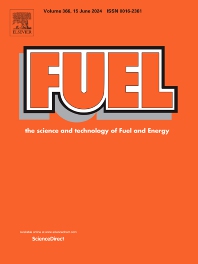
Fuel
The Science and Technology of Fuel and EnergyResearch into energy sources remains a key issue. Over the last 100 years, Fuel has been the leading source of primary research work in fuel science. The scope is broad and includes many topics of increasing interest such as environmental aspects and pollution.A wide variety of fuels are covered:Fuel cellsCokeHydrogen generation and useOils and gasesSynthetic fuels (including Dimethyl ether (DME), Methanol etc)BiofuelsAdvances in catalysis in sustainable fuelsNatural gasAdvances in materials for energyPetroleumSusta... new fuels - road, aviation and marineControl of emissions from new fuelsWaste-derived fuels (WDF)Refuse-derived fuels (RDF)Carbon with applications to fuel energyCarbon Capture, Utilisation and Storage - Science and TechnologiesAuthors are also welcome to submit to Fuel 's gold open access companion title, Fuel Communications.- ISSN: 0016-2361
International Journal of Greenhouse Gas Control
Carbon Capture — Transport — Utilization — StorageThe International Journal of Greenhouse Gas Control is a peer reviewed journal focusing primarily on Carbon Capture, Transport, Utilization & Storage. If your paper is not related to this area, it is not in scope for the Journal. The Journal invites research covering applied science and engineering advances in control of greenhouse gas emissions and reductions of their atmospheric concentrations through carbon dioxide capture, transport and storage. The Journal publishes results of experimental and pilot studies, technology demonstrations, process design and optimization, and techno-economic, policy, and life-cycle analyses relevant to applications in the power sector, major resource, manufacturing and production industries, and negative emissions technologies. Original research, review and comment papers are included.The scope of the journal (whilst not exclusive to) includes:CO2 captureNew research results relevant for large scale CO2 capture systems using chemical solvents, solid sorbents, chemical looping, calcium looping, membranes and membrane reactors and hybrid systems, PSA, cryogenics etc.Advances in CO2 capture processes (post combustion, pre combustion, oxy combustion) for power plants, cement and steel plants, refineries, petrochemicals, and other large industriesExperiment... results at pilot level from laboratory scale to demonstration, and relevant modelling work for scaling upCO2 capture process simulation for energy penalty reductions. Dynamic modelling.Cost analyses and cost reduction strategiesEnvironmen... impacts/risk, safety and life-cycle assessment of capture facilitiesCO2 TransportDesign and material/technical issues for CO2 transport systemsEconomic analyses and systems level optimization of CO2 transport systemsRisk assessments and safety issuesPermitting and regulatory issuesCO2 Geological storageGeological formation/storage capacity assessmentsMatching emissions sources and storage opportunitiesSite selection and characterizationMode... the fate and effects of stored CO2Integrity of the storage site, including caprocks and wellsTest injection research resultsRisk assessments and managementMonitoring tool developments and applicationsEnvironm... impact assessmentsDemonstra... project results and operational experiencesInduced seismicity, pressure maintenance, brine displacement, groundwater impactsRemediation and measurement, monitoring and verification issuesExperiences from natural/industrial analoguesAlternative storage optionsEx situ mineral carbonation (research results, safety/risk assessments, environmental/energy... issues, public acceptance, regulation and costs)Advanced weatheringOcean storageAlternative mitigation options/negative emission optionsBioCCS and other bioenergy mitigation optionsNegative emission accounting principlesComparison of different GHG mitigation options such as energy efficiency, renewables and nuclear power and their potential to reduce CO2 emissionsSystem integration and infrastructure developmentFlexibili... of operation of plants and on energy systems, integration issues, infrastructure development issues, financing and policiesImplementati... issuesLegal and regulatory developments/issuesH... capacity constraintsPublic awareness/acceptance issuesIndustry case studies on GHG mitigation technology implementation, learning by doing, knowledge transfer, stakeholder engagement and financing optionsIntegrated assessments, economic instruments that would induce commercial CCS deploymentEnergy and economic modelling of the role that CCS will play in the broader portfolio of emissions mitigation options under different scenariosAnalyses of policy options (national and international) to reduce GHG emissions and how these impact the commercial deployment of CCS systemsIf your paper is not related to Carbon Capture, Transport, Utilization & Storage, it is not in scope for the Journal.This journal welcomes contributions that support and advance the UN's sustainable development goals, in particular SDG 7 (Affordable and clean energy) and SDG 13 (Climate Action).- ISSN: 1750-5836

Geoenergy Science and Engineering
The objective of Geoenergy Science and Engineering is to bridge the gap between the engineering and the science of geoenergy and sustainable hydrocarbon production by publishing explicitly written articles intelligible to scientists, engineers, and geologists working in related areas.Geoenergy Science and Engineering covers the fields of geoenergy and sustainable hydrocarbon production in its broadest possible sense. The journal aims to publish articles with a particular focus on energy transition and achieving net-zero emission targets. General topics include: responsible and sustainable energy generation; carbon capture, utilization and storage (CCUS); geothermal energy; hydrogen production, transport, and storage; underground gas storage; application of artificial intelligence, machine learning and data analytics in energy industry; and sustainable hydrocarbon exploration and production.Papers will be published with the minimum of publication delay. Research articles, case histories, field process reports, short communications, book reviews, symposia proceedings and review articles are accepted. Generally, review articles on some topic of special current interest will be published.Formerly known as Journal of Petroleum Science and Engineering, with a 2022 IF of 4.4, and 2022 CiteScore of 8.8.- ISSN: 0920-4105

Geoenergy Science and Engineering
The objective of Geoenergy Science and Engineering is to bridge the gap between the engineering and the science of geoenergy and sustainable hydrocarbon production by publishing explicitly written articles intelligible to scientists, engineers, and geologists working in related areas.Geoenergy Science and Engineering covers the fields of geoenergy and sustainable hydrocarbon production in its broadest possible sense. The journal aims to publish articles with a particular focus on energy transition and achieving net-zero emission targets. General topics include: responsible and sustainable energy generation; carbon capture, utilization and storage (CCUS); geothermal energy; hydrogen production, transport, and storage; underground gas storage; application of artificial intelligence, machine learning and data analytics in energy industry; and sustainable hydrocarbon exploration and production.Papers will be published with the minimum of publication delay. Research articles, case histories, field process reports, short communications, book reviews, symposia proceedings and review articles are accepted. Generally, review articles on some topic of special current interest will be published.Formerly known as Journal of Petroleum Science and Engineering, with a 2022 IF of 4.4, and 2022 CiteScore of 8.8.- ISSN: 2949-8910
Gas Science and Engineering
Gas Science and Engineering aims to bridge the gap between scientific understanding and engineering practice in the study of natural and industrial gases. The journal publishes high-quality research that is accessible to both scientists and engineers working across Earth Sciences, and Energy Research.The journal’s mission is to promote environmentally sustainable exploration, processing, and utilization of diverse gas resources—including methane and other gaseous hydrocarbons, hydrogen, helium and other rare gases, CO₂, SO2, and other acid gases, as well as ammonia, NOx and other industrial gases—to support global energy transition and net-zero carbon goals.Its scope includes, but is not limited to:Origin, migration, and accumulation of natural gases Gas resource development, production, and processing technologiesSubsurfa... gas storage, geoengineering, and reservoir characterizationCarb... capture, utilization, and storageIndustrial gas production and controlGas separation methods and material developmentApplicati... of artificial intelligence, data analytics, analytical and numerical methods in gas science and engineeringGas Science and Engineering welcomes original research articles, review papers, short communications, and letters to the editor. Review papers are typically invited.- ISSN: 1875-5100

Gas Science and Engineering
Gas Science and Engineering aims to bridge the gap between scientific understanding and engineering practice in the study of natural and industrial gases. The journal publishes high-quality research that is accessible to both scientists and engineers working across Earth Sciences, and Energy Research.The journal’s mission is to promote environmentally sustainable exploration, processing, and utilization of diverse gas resources—including methane and other gaseous hydrocarbons, hydrogen, helium and other rare gases, CO₂, SO2, and other acid gases, as well as ammonia, NOx and other industrial gases—to support global energy transition and net-zero carbon goals.Its scope includes, but is not limited to:Origin, migration, and accumulation of natural gases Gas resource development, production, and processing technologiesSubsurfa... gas storage, geoengineering, and reservoir characterizationCarb... capture, utilization, and storageIndustrial gas production and controlGas separation methods and material developmentApplicati... of artificial intelligence, data analytics, analytical and numerical methods in gas science and engineeringGas Science and Engineering welcomes original research articles, review papers, short communications, and letters to the editor. Review papers are typically invited.- ISSN: 2949-9089