Books in Chemistry

Chemistry topic areas include: physical and theoretical, computational, organic, organometallic and inorganic, pharmaceutical and medicinal, analytical and bioanalytical, nuclear, general, nanochemistry, geochemistry, materials and polymer, as well as environmental, green and sustainable chemistry.

  • Sulfur Dioxide, Chlorine, Fluorine and Chlorine Oxides

    Solubility Data Series
    • 1st Edition
    • September 3, 2015
    • Colin L. Young
    • English
    Solubility Data Series, Volume 12: Sulfur Dioxide, Chlorine, Fluorine and Chlorine Oxides presents the solubility data of the title compounds in pure liquids, liquid mixtures, aqueous solutions, and miscellaneous fluids and fluid mixtures. This volume is composed of five chapters and begins with definition of pertinent terms related to gas solubility. The first three chapters provide the critical evaluation of the solubility of sulfur dioxide, chlorine, and fluorine in inorganic and organic substrates. The last two chapters present the solubility values of chlorine monoxide and dioxide. This book will be of value to students and researchers.
  • Chlorine

    International Thermodynamic Tables of the Fluid State
    • 1st Edition
    • September 3, 2015
    • S. Angus + 2 more
    • English
    Chlorine: International Thermodynamic Tables of the Fluid State-8 is a four-chapter book that covers available and estimated data on chlorine; estimation of the element's properties; the correlating equations for the element; and how the tabulated properties are calculated from chosen equation. The tables in this book give the volume, entropy, enthalpy, isobaric heat capacity, compression factor, fugacity/pressure ratio, Joule-Thomson coefficient, ratio of the heat capacities, and speed of sound as a function of pressure and temperature. Given in the tables as well are the pressure, entropy, internal energy, and isochoric heat capacity as functions of density and temperature, for the gas and liquid states from 0.025 MPa to 25 MPa at temperatures from 180 K to 900 K.
  • Rotating Fluids in Engineering and Science

    • 1st Edition
    • September 2, 2015
    • J P Vanyo
    • English
    Presents theory and physical concepts necessary to follow exciting new developments in the fields of rotating fluids and vorticity. Includes nine chapters devoted to specific engineering and earth science applications, such as centrifuges, wings,turbomachinery... liquids in spacecraft, river meandering, and atmospheric and oceanic flows. Useful in many engineering and science curricula and for practising engineers and scientists in a wide variety of industrial and research settings.
  • Process Chromatography

    A Guide to Validation
    • 1st Edition
    • September 2, 2015
    • Gail K. Sofer + 1 more
    • English
    Research and development into biological products for therapeutic use has increased dramatically over the last 10 years. With this, strict regulatory requirements have been imposed by authorities such as the U.S. Food & Drug Administration, so that today validation has become a key issue in the biopharmaceutical industry.This concise book addresses validation issues in the chromatography of biotherapeutics. It covers process design, qualification and validation, including an overview of analytical techniques commonly used in the validation of processes. A concluding section comments on product changeover and presents four case studies.
  • Organic Synthesis Using Biocatalysis

    • 1st Edition
    • September 2, 2015
    • Animesh Goswami + 1 more
    • English
    Organic Synthesis Using Biocatalysis provides a concise background on the application of biocatalysis for the synthesis of organic compounds, including the important biocatalytic reactions and application of biocatalysis for the synthesis of organic compounds in pharmaceutical and non-pharmaceutical areas. The book provides recipes for carrying out various biocatalytic reactions, helping both newcomers and non-experts use these methodologies. It is written by experts in their fields, and provides both a current status and future prospects of biocatalysis in the synthesis of organic molecules.
  • Side Reactions in Peptide Synthesis

    • 1st Edition
    • September 1, 2015
    • Yi Yang
    • English
    Side Reactions in Peptide Synthesis, based on the author’s academic and industrial experience, and backed by a thorough review of the current literature, provides analysis of, and proposes solutions to, the most frequently encountered side reactions during peptide and peptidomimetic synthesis. This valuable handbook is ideal for research and process chemists working with peptide synthesis in diverse settings across academic, biotech, and pharmaceutical research and development. While peptide chemistry is increasingly prevalent, common side reactions and their causes are often poorly understood or anticipated, causing unnecessary waste of materials and delay. Each chapter discusses common side reactions through detailed chemical equations, proposed mechanisms (if any), theoretical background, and finally, a variety of possible solutions to avoid or alleviate the specified side reaction.
  • Pericyclic Reactions

    A Mechanistic and Problem-Solving Approach
    • 1st Edition
    • August 24, 2015
    • Sunil Kumar + 2 more
    • English
    Pericyclic Reactions: A Mechanistic and Problem-Solving Approach provides complete and systematic coverage of pericyclic reactions for researchers and graduate students in organic chemistry and pharmacy programs. Drawing from their cumulative years of teaching in the area, the authors use a clear, problem-solving approach, supplemented with colorful figures and illustrative examples. Written in an accessible and engaging manner, this book covers electrocyclic reactions, sigmatropic reactions, cycloaddition reactions, 1,3-dipolar reactions, group transfer, and ene reactions. It offers an in-depth study of the basic principles of these topics, and devotes equal time to problems and their solutions to further explore those principles and aid reader understanding. Additional practice problems are provided for further study and course use.
  • Inorganic Controlled Release Technology

    Materials and Concepts for Advanced Drug Formulation
    • 1st Edition
    • August 24, 2015
    • Xiang Zhang + 1 more
    • English
    Inorganic Controlled Release Technology: Materials and Concepts for Advanced Drug Formulation provides a practical guide to the use and applications of inorganic controlled release technology (iCRT) for drug delivery and other healthcare applications, focusing on newly developed inorganic materials such as bioresorbable glasses and bioceramics. The use of these materials is introduced for a wide range of applications that cover inorganic drug delivery systems for new drug development and the reformulation of existing drugs. The book describes basic concepts, principles, and industrial practices by discussing materials chemistry, physics, nano/microstructure, formulation, materials processing, and case studies, as well as the evaluation and characterization of iCRT systems commonly investigated during industrial R&D.
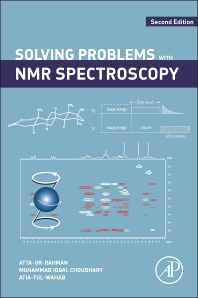
  • Solving Problems with NMR Spectroscopy

    • 2nd Edition
    • August 18, 2015
    • Atta-ur Rahman + 2 more
    • English
    Solving Problems with NMR Spectroscopy, Second Edition, is a fully updated and revised version of the best-selling book. This new edition still clearly presents the basic principles and applications of NMR spectroscopy with only as much math as is necessary. It shows how to solve chemical structures with NMR by giving many new, clear examples for readers to understand and try, with new solutions provided in the text. It also explains new developments and concepts in NMR spectroscopy, including sensitivity problems (hardware and software solutions) and an extension of the multidimensional coverage to 3D NMR. The book also includes a series of applications showing how NMR is used in real life to solve advanced problems beyond simple small-molecule chemical analysis. This new text enables organic chemistry students to choose the most appropriate NMR techniques to solve specific structures. The problems provided by the authors help readers understand the discussion more clearly and the solution and interpretation of spectra help readers become proficient in the application of important, modern 1D, 2D, and 3D NMR techniques to structural studies.
  • Annual Reports on NMR Spectroscopy

    • 1st Edition
    • Volume 86
    • August 18, 2015
    • English
    Annual Reports on NMR Spectroscopy provides a thorough and in-depth accounting of progress in nuclear magnetic resonance (NMR) spectroscopy and its many applications. Nuclear magnetic resonance (NMR) is an analytical tool used by chemists and physicists to study the structure and dynamics of molecules. In recent years, no other technique has gained as much significance as NMR spectroscopy. It is used in all branches of science in which precise structural determination is required and in which the nature of interactions and reactions in solution is being studied. Annual Reports on NMR Spectroscopy has established itself as a premier means for the specialist and non-specialist alike to become familiar with new techniques and applications of NMR spectroscopy.