Books in Life sciences

  • Studies in Natural Products Chemistry

    • 1st Edition
    • Volume 46
    • English
    Natural products present in the plant and animal kingdom offer a huge diversity of chemical structures, which are the result of biosynthetic processes that have been modulated over the millennia through genetic effects. With the rapid developments in spectroscopic techniques and accompanying advances in high-throughput screening techniques, it has become possible to isolate and then determine the structures and biological activity of natural products rapidly, thus opening up to the pharmaceutical industry exciting opportunities in the field of new drug development. The series covers all of the above as well as the synthesis, testing and recording of the medicinal properties of natural products. With articles written by leading authorities in their respective fields of research, Studies in Natural Products Chemistry, Volume 46 presents current frontiers and future guidelines for research based on important discoveries made in the field of bioactive natural products. It is a valuable resource for all those working in natural product and medicinal chemistry.
  • The Science and Ethics of Antipsychotic Use in Children

    • 1st Edition
    • Nina Di Pietro + 1 more
    • English
    The Science and Ethics of Antipsychotic Use in Children reviews the latest findings for the safety and efficacy of the rapidly rising incidence of antipsychotic use in children and examines tensions that are created by off-label use, both in clinical psychiatric practice and research.In the past ten years, the number of antipsychotics prescribed to children with psychiatric disorders has skyrocketed. Despite this rapid growth, most medications have been inadequately studied in children for safety or efficacy and many have serious adverse health. Measures are needed to ensure that the health and safety of children are being protected, and debates have emerged over whether or not clinical trials in this population should be conducted.
  • Advances in Clinical Chemistry

    • 1st Edition
    • Volume 69
    • English
    Volume 69 in the internationally acclaimed Advances in Clinical Chemistry contains chapters authored by world renowned clinical laboratory scientists, physicians and research scientists. The serial provides the latest and most up-to-date technologies related to the field of Clinical Chemistry and is the benchmark for novel analytical approaches in the clinical laboratory.
  • Basic Principles of Drug Discovery and Development

    • 1st Edition
    • Benjamin E. Blass
    • English
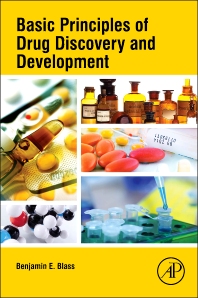
    Basic Principles of Drug Discovery and Development presents the multifaceted process of identifying a new drug in the modern era, providing comprehensive explanations of enabling technologies such as high throughput screening, structure based drug design, molecular modeling, pharmaceutical profiling, and translational medicine, all areas that have become critical steps in the successful development of marketable therapeutics. The text introduces the fundamental principles of drug discovery and development, also discussing important drug targets by class, in vitro screening methods, medicinal chemistry strategies in drug design, principles in pharmacokinetics and pharmacodynamics, animal models of disease states, clinical trial basics, and selected business aspects of the drug discovery process. It is designed to enable new scientists to rapidly understand the key fundamentals of drug discovery, including pharmacokinetics, toxicology, and intellectual property."
  • Essentials of Medical Biochemistry

    With Clinical Cases
    • 2nd Edition
    • Chung Eun Ha + 1 more
    • English
    Essentials of Medical Biochemistry, Second Edition: With Clinical Cases is the most condensed, yet detailed biochemistry overview available on the topic. It presents contemporary coverage of the fundamentals of biochemistry, emphasizing relevant physiologic and pathophysiologic biochemical concepts. Pivotal clinical case studies aid in understanding basic science in the context of diagnosis and treatment of human diseases, and the text illuminates key topics in molecular immunology and hemostasis. Users will find basic and fundamental concepts that will aid students and professionals in biochemistry, medicine, and other healthcare disciplines. the text is a useful refresher that will help users meet USMLE and other professional licensing examination requirements, providing thorough introductions, key points, multicolored illustrations of chemical structures and figures, fact-filled tables, and recommended reading lists.
  • Monoclonal Antibodies

    Meeting the Challenges in Manufacturing, Formulation, Delivery and Stability of Final Drug Product
    • 1st Edition
    • Steven Shire
    • English
    Monoclonal antibodies (MAbs) are currently the major class of protein bio therapeutic being developed by biotechnology and pharmaceutical companies. Monoclonal Antibodies discusses the challenges and issues revolving around development of a monoclonal antibody produced by recombinant DNA technology into a therapeutic agent.This book covers downstream processing which includes design of processes to manufacture the formulation, formulation design, fill and finish into closure systems and routes of administration. The characterization of the final drug product is covered where the use of biophysical methods combined with genetic engineering is used to understand the solution properties of the formulation. The latter has become very important since many indications such as arthritis and asthma require the development of formulations for subcutaneous delivery (SC). The development of formulations for IV delivery is also important and comes with a different set of challenges. The challenges and strategies that can overcome these limitations are discussed in this book, starting with an introduction to these issues, followed by chapters detailing strategies to deal with them. Subsequent chapters explore the processing and storage of mAbs, development of delivery device technologies and conclude with a chapter on the future of mAbs in therapeutic remedies.
  • Regenerative Engineering of Musculoskeletal Tissues and Interfaces

    • 1st Edition
    • Syam Nukavarapu + 2 more
    • English
    Repair and regeneration of musculoskeletal tissues is generating substantial interest within the biomedical community. Consequently, these are the most researched tissues from the regeneration point of view. Regenerative Engineering of Musculoskeletal Tissues and Interfaces presents information on the fundamentals, progress and recent developments related to the repair and regeneration of musculoskeletal tissues and interfaces. This comprehensive review looks at individual tissues as well as tissue interfaces. Early chapters cover various fundamentals of biomaterials and scaffolds, types of cells, growth factors, and mechanical forces, moving on to discuss tissue-engineering strategies for bone, tendon, ligament, cartilage, meniscus, and muscle, as well as progress and advances in tissue vascularization and nerve innervation of the individual tissues. Final chapters present information on musculoskeletal tissue interfaces.
  • Modeling Food Processing Operations

    • 1st Edition
    • Serafim Bakalis + 2 more
    • English
    Computational modeling is an important tool for understanding and improving food processing and manufacturing. It is used for many different purposes, including process design and process optimization. However, modeling goes beyond the process and can include applications to understand and optimize food storage and the food supply chain, and to perform a life cycle analysis. Modeling Food Processing Operations provides a comprehensive overview of the various applications of modeling in conventional food processing. The needs of industry, current practices, and state-of-the-art technologies are examined, and case studies are provided. Part One provides an introduction to the topic, with a particular focus on modeling and simulation strategies in food processing operations. Part Two reviews the modeling of various food processes involving heating and cooling. These processes include: thermal inactivation; sterilization and pasteurization; drying; baking; frying; and chilled and frozen food processing, storage and display. Part Three examines the modeling of multiphase unit operations such as membrane separation, extrusion processes and food digestion, and reviews models used to optimize food distribution.
  • Grapevine Breeding Programs for the Wine Industry

    • 1st Edition
    • Andrew G. Reynolds
    • English
    Grapevine Breeding Programs for the Wine Industry: Traditional and Molecular Techniques summarizes recent trends in grapevine breeding, both in terms of research and practical programs. The first group of chapters covers the challenges faced by breeders and existing and emerging techniques used to combat them. Two further groups of chapters focus on grapevine breeding programs in different wine-producing countries around the world. With authoritative contributions from experts across the world’s winemaking regions, this book will be an essential reference for all those involved in viticulture and oeneology wanting to explore new methods, understand different approaches and refine existing practices.
  • Advances in Parasitology

    • 1st Edition
    • Volume 88
    • English
    First published in 1963, Advances in Parasitology contains comprehensive and up-to-date reviews in all areas of interest in contemporary parasitology. Advances in Parasitology includes medical studies of parasites of major influence, such as Plasmodium falciparum and trypanosomes. The series also contains reviews of more traditional areas, such as zoology, taxonomy, and life history, which shape current thinking and applications. The 2013 impact factor is 4.36