Books in Environmental sciences

The Environmental Sciences titles present critical research and insights into the complex interactions within natural ecosystems, climate systems, and human impacts on the environment. Covering areas such as biodiversity, sustainability, climate change, and resource management, these titles support scientific discovery and practical solutions for addressing today’s most pressing environmental challenges. This collection is essential for researchers, policymakers, and students dedicated to advancing environmental understanding and stewardship

  • Functional Assessment of Wetlands

    Towards Evaluation of Ecosystem Services
    • 1st Edition
    • E. Maltby
    • English
    Wetlands perform functions that deliver benefits to society, often referred to as ecosystem services. These ecosystem services include water supply, flood regulation, water purification, climate regulation, biodiversity, agriculture (e.g. grazing land), and amenity. A functional approach to wetland assessment enables a holistic view to be taken of the wide range of services wetlands can provide. The functional assessment procedures (FAPs) in this volume translate best available scientific knowledge into reasonable predictions of how component parts of wetlands function in different landscape contexts. They can be used to indicate the potential and priorities for management options in such areas as flood control, pollution reduction and biodiversity conservation.Functio... assessment enables the user to predict the functioning of a wetland area without the need for comprehensive and expensive empirical research The FAPs therefore provide a methodology that can be used by both experts and non-experts to assess wetland functioning relatively rapidly. The volume includes an electronic version of the FAPs on CD which automates aspects of the assessment once the initial recording stage is completed. It is anticipated that the FAPs will be used by a range of individuals or organisations concerned with wetland management who wish to gain a better understanding of the processes, functions, services or benefits and potential of the wetlands for which they have responsibility.
  • Evolution and Development

    • 1st Edition
    • Volume 86
    • English
    The marriage of evolutionary biology with developmental biology has resulted in the formation of a new field, evolutionary developmental biology, or “evo-devo.” This volume reviews current research findings and thought in the broad field of evo-devo, looking at the developmental genetic mechanisms that cause variation and how alterations of these mechanisms can generate novel structural changes in a variety of plant and animal life.
  • Air Quality and Ecological Impacts

    Relating Sources to Effects
    • 1st Edition
    • Volume 9
    • Allan H. Legge
    • English
    Air Quality and Ecological Impacts reviews the characterization of air quality as it pertains to specific emission sources and their environmental effect. Since emissions from multiple sources impact the same location, a multidisciplinary approach is needed to relate atmospheric processes to terrestrial vegetation. As global industrial expansions continue, air quality is no longer governed by isolated point sources (e.g., a single coal-fired power plant), but by source clusters or complexes. To address these issues, atmospheric receptor models have been developed and are continually being improved. The benefits of any air quality control measures based on receptor modeling must be verified by assessing changes or bettering in environmental impacts. Until now, such an approach has not been well integrated and practiced. This book provides the needed concepts and methods in conducting the studies to establish cause-and-effect relationships under ambient conditions, which is valuable to policy makers both in industrialized and developing nations.
  • Encyclopedia of Animal Behavior

    • 1st Edition
    • Michael D. Breed + 1 more
    • English
    The Encyclopedia of Animal Behavior, Three Volume Set has engaged with great success the efforts of many of the best behavioral biologists of the 21st century. Section editors drawn from the most accomplished behavioral scientists of their generation have enrolled an international cast of highly respected thinkers and writers all of whom have taken great care and joy in illuminating every imaginable corner of animal behavior. This comprehensive work covers not only the usual topics such as communication, learning, sexual selection, navigation, and the history of the field, but also emerging topics in cognition, animal welfare, conservation, and applications of animal behavior. The large section on animal cognition brings together many of the world's experts on the subject to provide a comprehensive overview of this rapidly developing area. Chapters relating to animal welfare give a full view of behavioral interactions of humans with companion animals, farm animals, and animals in the wild. The key role of animal behavior in conservation biology receives broad attention, including chapters on topics such as the effects of noise pollution, captive breeding, and how the behavioral effects of parasites interacts with conservation issues. Animal behavior in environmental biology is highlighted in chapters on the effects of endocrine disruptors on behavior and a large number of chapters on key species, such as wolves, chimpanzees, hyenas and sharks. Clear, accessible writing complements a wealth of information for undergraduate college students about the essential concepts of animal behavior and the application of those concepts across the field. In-depth coverage of concepts, methods, and exemplar organisms serves the needs of graduate students and professionals in the field. From the use of behavior in assessing the welfare of pigs to the social behavior of insects, from animal empathy to bat brains, this authoritative reference, with its in-depth introductory articles, rich array of illustrations, interactive cross-referenced links, and numerous suggested readings, can guide the student or the professional to an expanded appreciation of the far-flung world of animal behavior. An invaluable tool for teaching and a source of enrichment and detail for any topic covered in an animal behavior course, the Encyclopedia of Animal Behavior is the definitive reference work in its field and will be for years to come.
  • Kingdoms and Domains

    An Illustrated Guide to the Phyla of Life on Earth
    • 1st Edition
    • Lynn Margulis + 1 more
    • English
    Now published by Academic Press and revised from the author's previous Five Kingdoms Third edition, this extraordinary, all inclusive catalogue of the world’s living organisms describes the diversity of the major groups, or phyla, of nature’s most inclusive taxa. Developed after consultation with specialists, this modern classification scheme is consistent both with the fossil record and with recent molecular, morphological and metabolic data. Generously illustrated, now in full color, Kingdoms and Domains is remarkably easy to read. It accesses the full range of life forms that still inhabit our planet and logically and explicitly classifies them according to their evolutionary relationships. Definitive characteristics of each phylum are professionally described in ways that, unlike most scientific literature, profoundly respect the needs of educators, students and nature lovers. This work is meant to be of interest to all evolutionists as well as to conservationists, ecologists, genomicists, geographers, microbiologists, museum curators, oceanographers, paleontologists and especially nature lovers whether artists, gardeners or environmental activists.Kingdoms and Domains is a unique and indispensable reference for anyone intrigued by a planetary phenomenon: the spectacular diversity of life, both microscopic and macroscopic, as we know it only on Earth today.
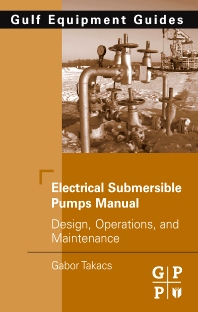
  • Electrical Submersible Pumps Manual

    Design, Operations, and Maintenance
    • 1st Edition
    • Gabor Takacs
    • English
    Ideal for removing large amounts of liquids from wells, Electrical Submersible Pumps (ESP) are perhaps the most versatile and profitable pieces of equipment in a petroleum company's arsenal. However, if not properly maintained and operated, they could quickly become an expensive nightmare. The first book devoted to the design, operation, maintenance, and care, Electrical Submersible Pumps Manual delivers the tools and applicable knowledge needed to optimize ESP performance while maximizing of run life and the optimization of production. The prefect companion for new engineers who need to develop and apply their skills more efficiently or experienced engineers who wish further develop their knowledge of best practice techniques, this manual covers basic electrical engineering, hydraulics and systems analysis before addressing pump components such as centrifugal pumps, motors, seals, separators, and cables. In addition, the author includes comprehensive sections on analysis and optimization, monitoring and trouble-shooting, and installation design and installation under special conditions.
  • Encyclopedia of Inland Waters

    • 1st Edition
    • Thomas Mehner
    • English
    Inland aquatic habitats occur world-wide at all scales from marshes, swamps and temporary puddles, to ponds, lakes and inland seas; from streams and creeks to rolling rivers. Vital for biological diversity, ecosystem function and as resources for human life, commerce and leisure, inland waters are a vital component of life on Earth. The Encyclopedia of Inland Waters describes and explains all the basic features of the subject, from water chemistry and physics, to the biology of aquatic creatures and the complex function and balance of aquatic ecosystems of varying size and complexity. Used and abused as an essential resource, it is vital that we understand and manage them as much as we appreciate and enjoy them. This extraordinary reference brings together the very best research to provide the basic and advanced information necessary for scientists to understand these ecosystems – and for water resource managers and consultants to manage and protect them for future generations.
  • Nanotechnology Applications for Clean Water

    Solutions for Improving Water Quality
    • 1st Edition
    • Mamadou Diallo + 4 more
    • Anita Street + 3 more
    • English
    The World Health Organization in 2004 estimated approximately 1.1 billion people did not have access to clean water and that 35% of Third World residents died from water-borne illnesses. While the situation is grim, recent advances strongly indicate that many of the current water quality problems can be addresses – and potentially resolved – using nanotechnology.Nanot... is already having a dramatic impact on research in water quality and Nanotechnology Applications for Clean Water highlights both the challenges and the opportunities for nanotechnology to positively influence this area of environmental protection.Here you will find detailed information on breakthroughs, cutting edge technologies, current research, and future trends that may affect acceptance of widespread applications. The first four parts of the book cover specific topics including using nanotechnology for clean drinking water in both large scale water treatment plants and in point-of-use systems. For instance, recent advances show that many of the current problems involving water quality can be addressed using nanosorbents, nanocatalysts, bioactive nanoparticles, nanostructured catalytic membranes, and nanoparticle enhanced filtration. The book also discusses existing technologies and future potential for groundwater remediation, pollution prevention, and sensors. The final part discusses the inherent societal implications that may affect acceptance of widespread applications. Over 80 leading experts from around the world share their wealth of knowledge in this truly unique reference. Institutions such as Center for the Purification of Water and Systems (Univ. of Illinois at Urbana-Champaign); UCLA Water Technology Center; Carnegie Mellon University, University of Kentucky; The University of Western Ontario; Pacific Northwest National Laboratory; National Institute for Advanced Industrial Science and Technology (Japan), Munasinghe Institute for Development (Sri Lanka) and the Woodrow Wilson Center for Scholars are just a few of the knowledge centers represented in this book. Water quality is a serious, global issue in which government bodies and scientific communities face many challenges in ensuring clean water is available to everyone. Nanotechnology is already showing dramatic results, and this book is an attempt to share current technologies and future possibilities in reaching this goal. From the Foreword:"Researcher... and practitioners may find in this volume, key challenges regarding clean water resources. The presentations may crystallize new research and education programs." - Mihail Roco, U.S. National Science Foundation and U.S. Nanotechnology Initiative
  • Ground Penetrating Radar Theory and Applications

    • 1st Edition
    • Harry M. Jol
    • English
    Ground-penetrating radar (GPR) is a rapidly developing field that has seen tremendous progress over the past 15 years. The development of GPR spans aspects of geophysical science, technology, and a wide range of scientific and engineering applications. It is the breadth of applications that has made GPR such a valuable tool in the geophysical consulting and geotechnical engineering industries, has lead to its rapid development, and inspired new areas of research in academia. The topic of GPR has gone from not even being mentioned in geophysical texts ten years ago to being the focus of hundreds of research papers and special issues of journals dedicated to the topic. The explosion of primary literature devoted to GPR technology, theory and applications, has lead to a strong demand for an up-to-date synthesis and overview of this rapidly developing field. Because there are specifics in the utilization of GPR for different applications, a review of the current state of development of the applications along with the fundamental theory is required. This book will provide sufficient detail to allow both practitioners and newcomers to the area of GPR to use it as a handbook and primary research reference.
  • The Ecology of Large Mammals in Central Yellowstone

    Sixteen Years of Integrated Field Studies
    • 1st Edition
    • Volume 3
    • Robert A. Garrott + 2 more
    • English
    This book is an authoritative work on the ecology of some of America’s most iconic large mammals in a natural environment - and of the interplay between climate, landscape, and animals in the interior of the world’s first and most famous national park.Central Yellowstone includes the range of one of the largest migratory populations of bison in North America as well as a unique elk herd that remains in the park year round. These populations live in a varied landscape with seasonal and often extreme patterns of climate and food abundance. The reintroduction of wolves into the park a decade ago resulted in scientific and public controversy about the effect of large predators on their prey, a debate closely examined in the book. Introductory chapters describe the geography, geology and vegetation of the ecosystem. The elk and bison are then introduced and their population ecology described both pre- and post– wolf introduction, enabling valuable insights into the demographic and behavioral consequences for their ungulate prey. Subsequent chapters describe the wildlife-human interactions and show how scientific research can inform the debate and policy issues surrounding winter recreation in Yellowstone. The book closes with a discussion of how this ecological knowledge can be used to educate the public, both about Yellowstone itself and about science, ecology and the environment in general. Yellowstone National Park exemplifies some of the currently most hotly debated and high-profile ecological, wildlife management, and environmental policy issues and this book will have broad appeal not only to academic ecologists, but also to natural resource students, managers, biologists, policy makers, administrators and the general public.