
Journals in Energy general
Journals in Energy general
Exploring the broad landscape of energy production and utilization, this selection encompasses traditional and emerging sources, energy systems, and technological innovations. It supports researchers, industry professionals, and policymakers in understanding energy dynamics, efficiency improvements, and sustainability strategies. Featuring comprehensive analyses and future-oriented approaches, these resources facilitate informed decisions to meet global energy demands responsibly.
Biomass & Bioenergy
Biomass & Bioenergy is an international journal publishing original research papers and short communications, review articles and case studies on biological resources, chemical and biological processes, and biomass products for new renewable sources of energy and materials. The scope of the journal extends to the environmental, management and economic aspects of biomass and bioenergy.Key areas covered by the journal: • Biomass: sources, energy crop production processes, genetic improvements, composition. Please note that research on these biomass subjects must be linked directly to bioenergy generation. • Biological Residues: residues/rests from agricultural production, forestry and plantations (palm, sugar etc), processing industries, and municipal sources (MSW). Papers on the use of biomass residues through innovative processes/technologi... novelty and/or consideration of feedstock/system sustainability (or unsustainability) are welcomed. However waste treatment processes and pollution control or mitigation which are only tangentially related to bioenergy are not in the scope of the journal, as they are more suited to publications in the environmental arena. Papers that describe conventional waste streams (ie well described in existing literature) that do not empirically address 'new' added value from the process are not suitable for submission to the journal. • Bioenergy Processes: fermentations, thermochemical conversions, liquid and gaseous fuels, and petrochemical substitutes. • Bioenergy Utilization: direct combustion, gasification, electricity production, chemical processes, and by-product remediation. • Biomass and the Environment: carbon cycle, the net energy efficiency of bioenergy systems, assessment of sustainability, and biodiversity issues.The journal does not consider papers on the following subjects: • Performance of fuel combustion in engines. • Technical aspects of first generation biofuels. • Soil science papers with no direct linking to bioenergy generation. • Isolation of yeast/bacterial strains. • Purely analytical biochemistry derived studies that have no direct linking to bioenergy generation.This journal welcomes contributions that support and advance the UN's sustainable development goals, in particular SDG 7 (Affordable and clean energy) and SDG 13 (Climate Action).- ISSN: 0961-9534

Journal of the Energy Institute
The Journal of the Energy Institute provides peer-reviewed coverage of original high-quality research on energy, engineering and technology.The coverage is broad, and the main areas of interest include:• Combustion engineering and associated technologies; power generation; engines and propulsion; emissions and environmental pollution control; clean coal technologies; carbon abatement technologies; • Emissions and environmental pollution control; • Alternative energy sources; biomass utilisation and biomass conversion technologies; energy from waste, incineration; • Energy conversion, energy recovery; fuel cells; • Energy storage; • Clean energy technologies; pyrolysis/gasificati... future fuels; hydrogen.The journal's coverage reflects changes in energy technology that result from the transition to more efficient energy production and end use together with reduced carbon emissions.This journal welcomes contributions that support and advance the UN's sustainable development goals, in particular SDG 7 (Affordable and clean energy)- ISSN: 1743-9671

Fuel
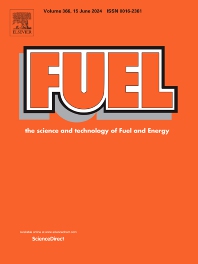
The Science and Technology of Fuel and EnergyResearch into energy sources remains a key issue. Over the last 100 years, Fuel has been the leading source of primary research work in fuel science. The scope is broad and includes many topics of increasing interest such as environmental aspects and pollution.A wide variety of fuels are covered:Fuel cellsCokeHydrogen generation and useOils and gasesSynthetic fuels (including Dimethyl ether (DME), Methanol etc)BiofuelsAdvances in catalysis in sustainable fuelsNatural gasAdvances in materials for energyPetroleumSusta... new fuels - road, aviation and marineControl of emissions from new fuelsWaste-derived fuels (WDF)Refuse-derived fuels (RDF)Carbon with applications to fuel energyCarbon Capture, Utilisation and Storage - Science and TechnologiesAuthors are also welcome to submit to Fuel 's gold open access companion title, Fuel Communications.- ISSN: 0016-2361
Joule
What is Joule?Joule, a sister journal to Cell, is a home for outstanding and insightful research, analysis and ideas addressing a key global challenge: the need for more sustainable energy.Joule is a distinctive and forward-looking journal, bridging disciplines and scales of energy research. Joule connects all who are researching and analyzing the challenges - scientific, technical, economic, policy and social - of providing sustainable energy solutions.Joule spans scales of energy research, from fundamental laboratory research into energy conversion and storage up to impactful analysis at the global level.Joule will purposefully highlights and amplifies the implications, challenges and opportunities of novel energy research for different groups working across the entire spectrum of the field.Visit the Cell Press website for more information about Joule - http://www.cell.com/...- ISSN: 2542-4351

Sustainable Energy Technologies and Assessments
The world must move toward a more sustainable energy future, and the development of technologies that facilitate this for transport, heating, and power systems is crucial. This journal encourages papers on any aspect and scale of technologies for energy generation and/or utilization that decrease the impact of that production and use, from the laboratory to commercial applications. Papers on technology development/improvem... integration, regulation, standards and policy are within the scope of the journal, as well as case studies. Technology assessments estimating and discussing metrics such as scale of application, size and weight per unit of energy output, economics, efficiency, and state of technology development are particularly welcomed, for both individual or comparative systems. The main fields of focus are generation, storage, and conversion; energy efficiency and distribution; and policy and economics. Energy fields include, but are not limited to, carbon capture and storage, wind, bioenergy, solar/PV, hydro, geothermal, and conventional fuels, along with system analysis, environmental issues, energy harvesting, and building design. Papers that incorporate more than one of these topics, either in a unified system or through a comparison of these fields, are encouraged.Sustainab... Energy Technologies and Assessments publishes a diverse array of manuscript types, including full-length research articles, review articles, case studies and perspectives.This journal welcomes contributions that support and advance the UN's sustainable development goals, in particular SDG 7 (Affordable and clean energy) and SDG 13 (Climate Action)- ISSN: 2213-1388

Applied Energy
Applied Energy provides a forum for information on research, innovation, development, and demonstration in the areas of energy conversion and conservation, the optimal use of energy resources, analysis and optimization of energy processes, multi-energy systems, mitigation of environmental pollutants through sustainable, secure, efficient energy systems, and fair and efficient transition to a Net Zero future. The journal publishes original research papers, review articles, technology assessment, bibliographical studies, and perspective papers. Authors are encouraged to submit manuscripts which bridge the gaps between research, development, and implementation. The breadth of coverage ranges from innovative technologies and systems of both low-carbon and renewable energy to the economic industrial, commercial, and domestic use of energy with no or minor impact on the environment. Applied Energy is also concerned with the energy related modelling, forecasting, and decision-making problems, energy market design and operation, energy conservation strategies, power system planning and operation, energy users modelling, and the environmental, social and economic impacts of energy policies and usage, including climate change mitigation and other environmental pollution reduction.Key topics covered in the journal include, but not limited to (the focus must be on applied aspects of energy):Renewable energy resources and technologiesEnergy networks and Smart GridMicrogrids and local energy systems Energy systems for Carbon Neutrality (climate mitigation and adaptation)Integrate... multi-energy systems and sector coupling Energy in buildings Energy storage Hydrogen and sustainable fuels Energy conservation and energy efficiency Flexibility, demand response, and forecasting models Carbon capture, utilization and storage for energy systemsApplications of Artificial Intelligence in energyOptimization and decision-making methods for energy systems problemsData analytics for energy problemsDecarbonizat... of transport (including EVs and hydrogen vehicles)Decarboniza... of heatProcess systems and decarbonization of industry Energy materials and emerging energy technologies Urban energy and smart city Cyberphysical systems for energy applicationsEnergy markets and economics Energy communities Virtual Power Plants and other energy/power related aggregators Energy policy and societal challenges Applied Energy is the companion title to the open access journal Advances in Applied EnergyThis journal welcomes contributions that support and advance the UN's sustainable development goals, in particular SDG 7 (Affordable and clean energy)- ISSN: 0306-2619

Geoenergy Science and Engineering
The objective of Geoenergy Science and Engineering is to bridge the gap between the engineering and the science of geoenergy and sustainable hydrocarbon production by publishing explicitly written articles intelligible to scientists, engineers, and geologists working in related areas.Geoenergy Science and Engineering covers the fields of geoenergy and sustainable hydrocarbon production in its broadest possible sense. The journal aims to publish articles with a particular focus on energy transition and achieving net-zero emission targets. General topics include: responsible and sustainable energy generation; carbon capture, utilization and storage (CCUS); geothermal energy; hydrogen production, transport, and storage; underground gas storage; application of artificial intelligence, machine learning and data analytics in energy industry; and sustainable hydrocarbon exploration and production.Papers will be published with the minimum of publication delay. Research articles, case histories, field process reports, short communications, book reviews, symposia proceedings and review articles are accepted. Generally, review articles on some topic of special current interest will be published.Formerly known as Journal of Petroleum Science and Engineering, with a 2022 IF of 4.4, and 2022 CiteScore of 8.8.- ISSN: 2949-8910

Geoenergy Science and Engineering
The objective of Geoenergy Science and Engineering is to bridge the gap between the engineering and the science of geoenergy and sustainable hydrocarbon production by publishing explicitly written articles intelligible to scientists, engineers, and geologists working in related areas.Geoenergy Science and Engineering covers the fields of geoenergy and sustainable hydrocarbon production in its broadest possible sense. The journal aims to publish articles with a particular focus on energy transition and achieving net-zero emission targets. General topics include: responsible and sustainable energy generation; carbon capture, utilization and storage (CCUS); geothermal energy; hydrogen production, transport, and storage; underground gas storage; application of artificial intelligence, machine learning and data analytics in energy industry; and sustainable hydrocarbon exploration and production.Papers will be published with the minimum of publication delay. Research articles, case histories, field process reports, short communications, book reviews, symposia proceedings and review articles are accepted. Generally, review articles on some topic of special current interest will be published.Formerly known as Journal of Petroleum Science and Engineering, with a 2022 IF of 4.4, and 2022 CiteScore of 8.8.- ISSN: 0920-4105
Electric Power Systems Research
An international journal devoted to research and new applications in generation, transmission, distribution and utilization of electric powerElectric Power Systems Research is an international medium for the publication of original papers concerned with the generation, transmission, distribution and utilization of electrical energy. The journal aims at presenting important results of work in this field, whether in the form of applied research, development of new procedures or components, orginal application of existing knowledge or new design approaches. The scope of Electric Power Systems Research is broad, encompassing all aspects of electric power systems. The following list of topics is not intended to be exhaustive, but rather to indicate topics that fall within the journal purview.• Generation techniques ranging from advances in conventional electromechanical methods, through nuclear power generation, to renewable energy generation. • Transmission, spanning the broad area from UHV (ac and dc) to network operation and protection, line routing and design. • Substation work: equipment design, protection and control systems. • Distribution techniques, equipment development, and smart grids. • The utilization area from energy efficiency to distributed load levelling techniques. • Systems studies including control techniques, planning, optimization methods, stability, security assessment and insulation coordination.This journal welcomes contributions that support and advance the UN's sustainable development goals, in particular SDG 7 (Affordable and clean energy)- ISSN: 0378-7796

Materials Today Physics
Materials Today Physics is a multi-disciplinary journal dedicated to the physics of materials dealing with both the physical properties and materials synthesis.Materials physics is one of the largest and most active fields within physical science. Cutting edge research at the interface between physics and materials science is leading to new materials, new physics, and new applications at an unprecedented pace.Spanning all aspects of materials physics, including condensed matter physics, materials physics, solid mechanics, photonics and optical properties, Materials Today Physics provides a high impact platform for the materials science and physics communities to share and discuss findings that are revolutionizing our understanding of materials and physics.Part of the Materials Today family of journals, Materials Today Physics offers authors rigorous peer review, rapid decisions, and high visibility. The editors welcome comprehensive articles, short communications and reviews on topics including but not limited to:Functional materialsQuantum materialsElectronic propertiesThermal propertiesMechanical propertiesSurfaces and interfacesOptical materialsLow dimensional materialsMaterials with extreme propertiesPlasmonics- ISSN: 2542-5293
