Books in Environmental sciences

The Environmental Sciences titles present critical research and insights into the complex interactions within natural ecosystems, climate systems, and human impacts on the environment. Covering areas such as biodiversity, sustainability, climate change, and resource management, these titles support scientific discovery and practical solutions for addressing today’s most pressing environmental challenges. This collection is essential for researchers, policymakers, and students dedicated to advancing environmental understanding and stewardship

  • Alternative Uses for Sewage Sludge

    Proceedings of a Conference Organised by WRc Medmenham and Held at the University of York, UK on 5-7 September 1989
    • 1st Edition
    • J. E. Hall
    • English
    The treatment and disposal of sewage sludge is an expensive and environmentally sensitive problem that is growing worldwide. Sludge production is increasing whilst previously accepted methods for disposal are coming under pressure or even being phased out altogether so there is now an urgency to find cost-effective and innovative solutions that appease environmental and public pressures. The purpose of the conference recorded in these proceedings was to review the range of alternative disposal/recycling options for sewage sludge. The alternative uses considered are in land reclamation, forestry, compost and soil production, landfill, incineration, and energy and resource recovery. The papers presented include recent research findings and technological developments, as well as operational implementation of schemes, showing that beneficial re-use of sludge can be entirely compatible with a cost-effective and environmentally sensitive approach to sludge disposal.
  • Basic Water and Wastewater Treatment

    Butterworths Basic Series
    • 1st Edition
    • T H Y Tebbutt
    • English
    Basic Water and Wastewater Treatment discusses the water cycle, flow measurement, physical treatment processes, chemical treatment processes, biological treatment process, and sludge handling and treatment. The book also describes the use of the BASIC computer program to calculate problems involving water pollutants. Flow measurements involve the use of a gauging structure, velocity measurements of a known cross-section, or dilution gauging. To evaluate, in quantitative terms, the effects of a certain pollutant discharged and received by a body of water, the investigator can employ a tool in chemical dilution gauging—the mass balance analysis. Many microorganisms, organic and inorganic compounds degrade in a natural process of self-purification; their decay can be modeled as an exponential function. One standard of water treatment facility or wastewater treatment plant cannot be built to deal with all the various components of water pollution. The book cites relevant standards such as the EC Directive 80/778/EEC: "Quality of Water Intended for Human Consumption" in the EU; the "Safe Drinking Water Act" in the U.S.A.; and the "Guidelines for Drinking Water Quality" issued by the World Health Organization. The book describes water quality parameters, water supply sources, and wastewater collection, including its treatment and disposal.
  • Chemical Fate and Transport in the Environment

    • 1st Edition
    • Harold F. Hemond + 1 more
    • English
    Chemical Fate and Transport in the Environment focuses on the basic principles of chemical behavior in the environment. The publication first offers information on basic concepts and surface waters. Discussions focus on abiotic chemical transformations, chemical and biological characteristics of surface waters, physical transport in surface waters, basic environmental chemistry, mass balance and the control volume, and chemical mass and concentration. The text then elaborates on the subsurface environment and the atmosphere. Topics include atmospheric chemical reactions, transport of chemicals in the atmosphere, atmospheric stability, physical removal of chemicals from the atmosphere, physics of groundwater movement, and flow in the unsaturated zone. The book takes a look at retardation, biodegradation, and dimensions and units for environmental quantities. The publication is a dependable reference for students and researchers interested in the fundamental principles of chemical behavior in the environment.
  • Chlorinated Dioxins & Related Compounds

    Impact on the Environment
    • 1st Edition
    • O. Hutzinger + 3 more
    • English
    The complex multidisciplinary problem posed by PCDD can best be understood by the interaction of scientists from different disciplines. This workshop was organised to allow scientific exchange by such experts. The most recent advances in analytical methodology, environmental fate and levels, incineration toxicology (metabolism), animal toxicology and observations in man are covered
  • Key Environments: Malaysia

    • 1st Edition
    • Earl of Cranbrook
    • English
    Of the vast area of structurally similar vegetation that forms the Far Eastern tropical rain forest block, only the forests of peninsular Malaysia lie on the mainland of Asia. Although showing some influence from this source, the flora and fauna are distinctive and exceedingly rich in species. Among other factors, this richness reflects the complex structure of the vegetation, justly famous for the extensive stands of tall trees that create the conditions to which many smaller plants, fungi and a huge variety of animals are adapted. After a century of scientific investigation, it is now possible to understand peninsular Malaysia's complex ecosystem as an essential prerequisite to the successful management for conservation and long-term productivity in the area. Compiled by authors with personal experience of the region, this book constitutes the most authoritative account of this diverse and fragile region. It is essential reading for all those interested in Malaysia and its conservation.
  • Relative Radiation Sensitivities of Human Organ Systems

    Advances in Radiation Biology, Vol. 12
    • 1st Edition
    • John T. Lett + 1 more
    • English
    Advances in Radiation Biology, Volume 12: Relative Radiation Sensitivities of Human Organ Systems covers articles on the response of selected human organ and tissue systems to exposure to ionizing radiation. The book presents articles on the relative radiosensitivities of the thymus, spleen, lymphohemopoietic systems, small and large intestines, oral cavity, larynx, pharynx, and esophagus. The text also includes articles on the relative radiation sensitivity of the integumentary system, as well as the relative radiosensitivity of the human lung and fetal tissues. The tolerance of the central and peripheral nervous system to therapeutic irradiation is also encompassed. Radiation biologists, oncologists, physicians, pediatricians, and medical students will find the book useful.
  • Applications of New Concepts of Physical-Chemical Wastewater Treatment

    Vanderbilt University, Nashville, Tennessee September 18-22, 1972
    • 1st Edition
    • W.W. Eckenfelder + 1 more
    • English
    Applications of New Concepts of Physical-Chemical Wastewater Treatment deals with novel concepts of physical-chemical wastewater treatment, with particular reference to their engineering applications. Topics covered range from ultrahigh rate filtration of municipal wastewater to the applicability of carbon adsorption in the treatment of petrochemical wastewaters, along with regeneration of activated carbon and dewatering of physical-chemical sludges. Comprised of 31 chapters, this volume begins with a discussion on the use of physical-chemical methods for the treatment of municipal wastes and for direct wastewater treatment. The following chapters focus on the interrelationships between biological treatment and physicochemical treatment; some problems associated with the treatment of sewage by non-biological processes; treatment of wastes generated by metal finishing and engineering industries; and the principles and practice of granular carbon reactivation. The precipitation of calcium phosphate in wastewaters is also considered, together with the use of surface stirrers for ammonia desorption from ponds. This book will be a valuable resource for chemists, engineers, government officials, and environmental policymakers.
  • Sources of Air Pollution and Their Control

    Air Pollution
    • 2nd Edition
    • Arthur C. Stern
    • English
    Air Pollution, Second Edition, Volume III: Sources of Air Pollution and Their Control discusses the cause, effect, transport, measurement, and control of air pollution. The volume tackles the emissions to the atmosphere from the principal air pollution sources; the control techniques and equipment used to minimize these emissions; the applicable laws, regulations, and standards; and the administrative and organizational procedures used to administer these laws, regulations, and standards. Engineers, physicians, meteorologists, lawyers, economists, sociologists, agronomists, toxicologists, and public administrators will find the book a valuable reference material.
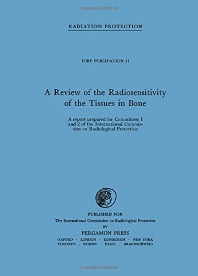
  • A Review of the Radiosensitivity of the Tissues in Bone

    A Report Prepared for Committees 1 and 2 of the International Commission on Radiological Protection and Received by the Committees on April 3, 1967
    • 1st Edition
    • Sam Stuart
    • English
    A Review of the Radiosensitivity of the Tissues in Bone is a report prepared by the Task Group for the International Commission on Radiological Protection Committees 1 and 2. The book reviews a biological indicator of the maximum permissible radiation dose. Data shows that an induction of malignant change should be considered as the limiting factor in maximum permissible levels for the bone. The risk of carcinogenesis in cells is connected with the proliferative potential of the cells. These cells are on bone marrow surfaces, in hematopoietic marrow, and in certain epithelial cells close to bone surfaces. The text also reviews the changes in the patterns of distribution resulting from growth and remodeling of bone. The book examines the effect of distribution of alkaline earth, of plutonium, of thorium, of americium, and of phosphorus in bone growth. The book also evaluates the comparative tumorigenic effects of external and internal irradiation of bone and the factors to be considered in determining the dose limitation from bone-seeking radionuclides. This book can prove beneficial to researchers and practitioners in the fields of radiology, internal medicine, or oncology.
  • Environmental Impact Assessment for Developing Countries

    • 1st Edition
    • Asit K. Biswas + 1 more
    • English
    Environmental Impact Assessment for Developing Countries is based on selected papers presented at the 1991 International Conference on Environment Impact Assessment, held at New Delhi, India. This work is organized into four parts encompassing 18 chapters. Part I provides an overview and general considerations of balance environmental impact assessment (EIA), with particular emphasis in the developing countries in Asia. Part II highlights various EIA performed in different industry, including chemical plants, coal mining, thermal and power plant, and solid waste disposal. This part also describes the simulation modeling in EIA. Part III discusses the national experiences in EIA. This part elaborates on EIA of development projects in Netherlands, Sweden, Philippines, Tanzania, Canada, India, and United Kingdom. Part IV provides a summary and recommendations. This book will prove useful to environmental and research scientists.