
Journals in International economics
Journals in International economics
Covering trade theory, policy, globalization, and exchange rates, this portfolio supports researchers, policymakers, and students in navigating the complexities of global markets. Featuring contemporary analyses, empirical data, and case studies, these resources facilitate understanding of international economic integration, trade tensions, and economic diplomacy.
European Economic Review
Established in 1969, European Economic Review is one of the oldest general-interest economics journals for all of Europe. It is intended as a primary publication for theoretical and empirical research in all areas of economics. The purpose of the journal is to select articles that will have high relevance and impact in a wide range of topics. All work submitted to the journal should be original in motivation or modelling and be capable of replication.- ISSN: 0014-2921

The Journal of Economic Asymmetries
The journal aims to publish scholarly articles on economic, financial, technological and legal asymmetries within and among markets in an increasingly globalized world.Asymmetries are broadly interpreted as economic relationships between trading partners with unequal market power and also in the narrow technical sense of dissimilar information between trading agents.Asymmetries also may arise in cases of economic, financial or currency crises. The wide range of dissimilar policy recommendations in such cases may also reflect asymmetric policy responses.Closely related to international economic asymmetries, one may find economic, legal and technological conditions differing from one economy to another because of the size of countries, their institutions and their history. Acknowledging and investigating such differences is also a concern of the journal.The recent global financial crisis has created numerous economic asymmetries. Topics of interest include: sovereign debt, banking fragility, corporate deleveraging, asymmetries in macro-prudential regulation between countries with high and low developed financial markets, persistent high unemployment, challenges in the conduct of appropriate monetary and fiscal policies, national versus supranational regulatory systems, consequences of the Euro-zone financial crisis, the future of the euro, global monetary and fiscal stability, strategies to stop the immense increases in fiscal deficits and to regain fiscal stability, regulatory systems limiting world-wide contagion effects, regulatory measures to increase the soundness of the banks' balance sheets and to supervise financial transactions between globalised banks, multiple equilibria in financial markets, wealth volatility, the behavior of commodity markets and changes in leading currency markets. Ethical, behavioral and political dimensions of crises are also included.Volumes 1 through 9 are available on line at http://www.apforum.o...- ISSN: 1703-4949

Journal of International Financial Markets, Institutions & Money
International trade, financing and investments, and the related cash and credit transactions, have grown at an extremely rapid pace in recent years. The international monetary system has continued to evolve to accommodate the need for foreign-currency denominated transactions and in the process has provided opportunities for its ongoing observation and study.The purpose of the Journal of International Financial Markets, Institutions & Money is to publish rigorous, original articles dealing with the international aspects of financial markets, institutions and money. Theoretical/conceptu... and empirical papers providing meaningful insights into the subject areas will be considered. The following topic areas, although not exhaustive, are representative of the coverage in this Journal.• International financial markets • International securities markets • Foreign exchange markets • Eurocurrency markets • International syndications • Term structures of Eurocurrency rates • Determination of exchange rates • Information, speculation and parity • Forward rates and swaps • International payment mechanisms • International commercial banking; • International investment banking • Central bank intervention • International monetary systems • Balance of payments.- ISSN: 1042-4431

Pacific-Basin Finance Journal
The Pacific-Basin Finance Journal (PBFJ) aims to provide a specialized forum for the publication of reliable academic research on capital markets within the Asia-Pacific region (but excluding papers that only use US data). Primary emphasis is placed on the highest quality empirical investigations that focus on research questions in the broad realm of financial economics, addressing mainstream contemporary topics relevant to e.g., investments, asset pricing, corporate finance, financial decision-making.Furt... we generally seek to encourage researchers to engage in topics that produce more "useful" research i.e., to produce research that goes meaningfully beyond narrow academic impact. Most notably, such useful research addresses the challenge of solving important and enduring issues of critical relevance to real-world financial problems and/or practical impediments inhibiting optimal decision-making by key stakeholders operating in financial markets.Moreover, PBFJ strongly welcomes submissions that embrace the principles of "responsible science", reflected in three foundational pillars:Credible/rel... research;Useful/rele... research; andIndependent/unbia... researchTo this end, while we continue to invite the submission of the traditional form of original and completed full-study research manuscripts, we also offer an alternative "pre-registration" pathway to publication as detailed in the PBFJ Editorial Note (accessible using the link below):https://www.s... by this form of innovative publication, the editors of PBFJ will exercise best efforts to publish well-executed bold and exciting research, irrespective of whether or not it produces statistically significant and/or positive findings. In other words, the editors of PBFJ believe that it is critical we take a conscious stand against publication bias in order to responsibly service our scientific community.- ISSN: 0927-538X

Emerging Markets Review
The intent of the editors is to consolidate Emerging Markets Review as the premier vehicle for publishing high impact empirical and theoretical studies in emerging markets finance. Preference will be given to comparative studies that take global and regional perspectives, detailed single country studies that address critical policy issues and have significant global and regional implications, and papers that address the interactions of national and international financial architecture. We especially welcome papers that take institutional as well as financial perspectives.Publish... papers are expected to include a discussion of next steps and possible extensions for further research in the conclusion section.- ISSN: 1566-0141

Journal of Asian Economics
The Journal of Asian Economics publishes original research works from all fields of economics, particularly those with an emphasis on the economy of Asian Countries. Research that compares the economic development in Asian Countries with that in other countries is also encouraged.We follow a single-blind peer review procedure for article selection. A submission fee of $100 applies. Please see our Guide for Authors for information on article submission.- ISSN: 1049-0078

Journal of Financial Stability
Published in collaboration with the Gabelli School of Business at Fordham UniversityThe Journal of Financial Stability provides an international forum for rigorous theoretical and empirical macro and micro economic and financial analysis of the causes, management, resolution and preventions of financial crises, including banking, securities market, payments and currency crises. The primary focus is on applied research that would be useful in affecting public policy with respect to financial stability. Thus, the Journal seeks to promote interaction among researchers, policy-makers and practitioners to identify potential risks to financial stability and develop means for preventing, mitigating or managing these risks both within and across countries.- ISSN: 1572-3089

Japan and the World Economy
International Journal of Theory and PolicyThe increase in Japan's share of international trade and financial transactions has had a major impact on the world economy in general and on the U.S. economy in particular. The new economic interdependence between Japan and its trading partners created a variety of problems and so raised many issues that require further study.Japan and the World Economy will publish original research in economics, finance, managerial sciences, and marketing that express these concerns.Japan and the World Economy seeks to meet the growing need for comprehensive, impartial and scientific study of trade imbalance and friction, technological competition, internationalization of financial markets, exchange rate variation and macroeconomic coordination, comparative managerial and marketing practices and other related topics. Contributions are solicited from a broad-based, international community of scholars. In addition to empirical and policy-oriented studies, Japan and the World Economy also welcomes theoretical analysis that contributes to an understanding of the issues and proposes corrective action.- ISSN: 0922-1425

Journal of the Japanese and International Economies
The Journal of the Japanese and International Economies publishes original reports of research devoted to academic analyses of the Japanese economy and its interdependence on other national economies. The Journal also features articles that present related theoretical, empirical, and comparative analyses with their policy implications.Researc... Areas Include:Analyses of the interdependence between the Japanese and Western economies General analyses of economic theory and policy Reviews of other international issues related to the Japanese economy and to the economies of the Pacific Basin Studies of the Japanese perspective on contemporary economic issues Theoretical, empirical, and comparative analyses of Japanese markets and institutions- ISSN: 0889-1583

International Economics
International Economics publishes top-quality, original research in applied international economics. Topics covered include trade, trade policy, macroeconomics and finance. International Economics, is a peer-reviewed journal devoted to the publication of research in the area of applied international economics. The journal especially welcomes empirical contributions that include, but are not limited to, topics in international trade, commercial policy, open economy macroeconomics, international finance, exchange rates, financial and monetary policies, economic development, migration and factor movements.Other than regular submission (“Research papers”), two additional forms of submissions are offered: “Data, Tools, and Replication” and “Short communication". The journal also has a “Transfer” option from top journals.The "Data, Tools, and Replication" section is devoted to the publication of short notes presenting new and innovative datasets in the area of international economics, new tools useful for research in international economics, and/or replications of existing empirical studies in the field of international economics. As for all articles submitted to International Economics, papers for the "Data, Tools and Replication" section follow the standard refereeing process. For more details about the "Data, Tools and Replication" section, please see the file DataToolsReplication... “Short paper” section is devoted to manuscripts with at most 7,000 words. Each exhibit (table or figure) reduces the word limit by 200 words (e.g., a manuscript with five exhibits has a maximum length of 6,000 words). A maximum of five exhibits is allowed. The first decision will be accept, accept conditional on minor (expositional) changes, reject, or desk reject. Manuscripts must be self-contained. Papers will be rejected if the editor or the referees cannot assess the paper’s contribution based solely on the main text (i.e., without referring to appendices). The current turnaround time to a first decision is 39 days, with an approximate acceptance rate of 12%. To avoid unnecessary delay for authors, the editor might decide to return the paper to the author(s) before full review if she/ he determines that the paper is not suitable for the journal. The decision is always motivated.Internatio... Economics also offers a transfer option for papers which were marginally rejected from top field or general purpose journals. Authors could require the editors of International Economics to consider reports and editorial decisions taken within the last six months from such journals. The submission should then be accompanied by (i) a cover letter indicating that the paper is submitted through the informal cascading option, (ii) the previous referee reports and (iii) a document describing how the authors have incorporated the comments of the referees and editors of the journal which earlier rejected the paper.International Economics encourages young researchers to submit their work. The journal will also organize special issues to emphasize new research directions.The journal is indexed by EconLit, RePEc and Scopus.- ISSN: 2110-7017

Journal of Multinational Financial Management
International trade, financing and investments have grown at an extremely rapid pace in recent years, and the operations of corporations have become increasingly multinationalized. Corporate executives buying and selling goods and services, and making financing and investment decisions across national boundaries, have developed policies and procedures for managing cash flows denominated in foreign currencies. These policies and procedures, and the related managerial actions of executives, change as new relevant information becomes available.The purpose of the Journal of Multinational Financial Management is to publish rigorous, original articles dealing with the management of the multinational enterprise. Theoretical, conceptual, and empirical papers providing meaningful insights into the subject areas will be considered. The following topic areas, although not exhaustive, are representative of the coverage in this Journal.• Foreign exchange risk management • International capital budgeting • Forecasting exchange rates • Foreign direct investment • Hedging strategies • Cost of capital • Managing transaction exposure • Political risk assessment • International working capital management • International financial planning • International tax management • International diversification • Transfer pricing strategies • International liability management • International mergers.- ISSN: 1042-444X

Journal of International Money and Finance
Theoretical and Empirical Research in International Economics and FinanceSince its launch in 1982, Journal of International Money and Finance has built up a solid reputation as a high quality scholarly journal devoted to theoretical and empirical research in the fields of international monetary economics, international finance, and the rapidly developing overlap area between the two. Researchers in these areas, and financial market professionals too, pay attention to the articles that the journal publishes.Authors published in the journal are in the forefront of scholarly research on exchange rate behaviour, foreign exchange options, international capital markets, international monetary and fiscal policy, international transmission and related questions. With articles being submitted from economists and finance specialists in major research universities, smaller universities, central banks and private financial institutions worldwide, the journal achieves an extraordinary diversity, in both topic and approach, and provides a truly global perspective on international economic and financial questions.Index bound in last issue of calendar year.Editorial Policy The total time for refereeing and handling by the Editors and the Editorial Board will not exceed thirty (30) weeks. In order to ensure timely publication, authors will be allowed a maximum of six (6) months for delivery of a major revision, and a maximum of three (3) months for minor revisions. Any revisions submitted beyond these deadlines will be considered as resubmissions.- ISSN: 0261-5606

China Economic Review
The official journal of The Chinese Economists SocietyThe China Economic Review publishes original research works on the economy of China, and its relation to the world economy. We seek, in particular, quantitative and analytical papers dealing with institutional change, policy and performance of the Chinese economy; research that compares the development process in China with that in other countries is encouraged.- ISSN: 1043-951X

Journal of Financial Markets
The Journal of Financial Markets publishes high quality original research on applied and theoretical issues related to securities trading and pricing. Area of coverage includes the analysis and design of trading mechanisms, optimal order placement strategies, the role of information in securities markets, financial intermediation as it relates to securities investments - for example, the structure of brokerage and mutual fund industries, and analyses of short and long run horizon price behaviour. The journal strives to maintain a balance between theoretical and empirical work, and aims to provide prompt and constructive reviews to paper submitters.- ISSN: 1386-4181

Journal of Financial Stability
Published in collaboration with the Gabelli School of Business at Fordham UniversityThe Journal of Financial Stability provides an international forum for rigorous theoretical and empirical macro and micro economic and financial analysis of the causes, management, resolution and preventions of financial crises, including banking, securities market, payments and currency crises. The primary focus is on applied research that would be useful in affecting public policy with respect to financial stability. Thus, the Journal seeks to promote interaction among researchers, policy-makers and practitioners to identify potential risks to financial stability and develop means for preventing, mitigating or managing these risks both within and across countries.- ISSN: 1572-3089
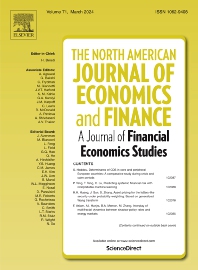
The North American Journal of Economics and Finance
A Journal of Financial Economics StudiesThe North-American Journal of Economics and Finance publishes high-quality, original manuscripts in financial economics. Areas of interest include, but are not limited to:• Stock market, • Financial intermediation and capital markets, • Law and finance, financial institutions, • Integration of financial markets, • International finance, • Corporate governance, • Information and security markets, • Behavioral finance, • Hedging and risk management, • Corporate financial policy, • Financial econometrics, • Other applied topics in micro and macroeconomics.The journal takes steps to ensure a balance between theoretical and empirical work and, in addition, it aims to provide prompt and constructive reviews to authors. Empirical analyses ought to be replicable. Where relevant, the authors of accepted papers will be encouraged to supply data and computer programs.- ISSN: 1062-9408
Research in Economics
Established in 1947, Research in Economics is one of the oldest general-interest economics journals in the world and the main one among those based in Italy. The purpose of the journal is to select original theoretical and empirical articles that will have high impact on the debate in the social sciences; since 1947, it has published important research contributions on a wide range of topics.A summary of our editorial policy is this: the editors make a preliminary assessment of whether the results of a paper, if correct, are worth publishing. If so one of the associate editors reviews the paper: from the reviewer we expect to learn if the paper is understandable and coherent and - within reasonable bounds - the results are correct.We believe that long lags in publication and multiple demands for revision simply slow scientific progress. Our goal is to provide you a definitive answer within one month of submission. We give the editors one week to judge the overall contribution and if acceptable send your paper to an associate editor. We expect the associate editor to provide a more detailed evaluation within three weeks so that the editors can make a final decision before the month expires.In the (rare) case of a revision we allow four months and in the case of conditional acceptance we allow two months to submit the final version. In both cases we expect a cover letter explaining how you met the requirements. For conditional acceptance the editors will verify that the requirements were met. In the case of revision the original associate editor will do so. If the revision cannot be at least conditionally accepted it is rejected: there is no second revision.- ISSN: 1090-9443

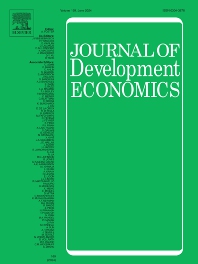
Journal of Development Economics
The Journal of Development Economics publishes original research papers relating to all aspects of economic development - from immediate policy concerns to structural problems of underdevelopment. The emphasis is on quantitative or analytical work, which is novel and relevant. The Journal does not publish book reviews. We welcome papers that take up questions in development economics that are of interest to the general readers of the journal, and then use data from a particular country or region to answer them. However, we do not publish articles that are essentially in-depth studies of a specific country, region, case, or event whose findings are unlikely to be of great interest to the general readers of the journal. In our review process we pre-screen all papers, some of which are immediately rejected. This includes papers that are not considered to be a good fit in terms of the topic or the methodology even though development is a broad field and sometimes this is a matter of subjective judgment. This also includes papers that fall short of our high standards, in terms of the contribution or value added to the literature, or in terms of methodological rigor. The Journal receives approx. 1300 papers per year and publishes only a small fraction (around 6-8%). To make this work in a timely fashion we only send 1/4 papers out for review. Given this volume we regret that we cannot provide explanations on our desk reject papers. Under normal circumstances, an author cannot submit (either s/he directly or through a co-author) more than three papers within any 12 month period. Papers that are once rejected by the JDE will not be considered for publication again, even if the authors use a new dataset or a new model. This is only possible if the editor in his or her decision letter explicitly leaves open this possibility. Special submissions:Register... Reports: The JDE offers authors the opportunity to have their prospective empirical projects reviewed and approved for publication before the results are known (referred to as 'Registered Reports'). This pre-results review track may be particularly suitable for authors working on research projects for which they have not yet collected or accessed data. Submissions in this track will follow existing policies outlined in the Author Information Pack, including the Mandatory Replication Policy, but specific information is available in the JDE Registered Reports Author Guidelines. A website including the Guidelines and information on Phase 1 acceptances to data is available here. To submit a Registered Report, select "Registered Report Stage I: Proposal" as the article type in the submission portal. "Registered Report Stage II: Full Article" should only be used for articles derived from accepted Stage I submissions.Short Papers: The JDE offers the authors a short-paper limited revision track. Submission guidelines follow AER: Insights. Manuscripts should be at most 6,000 words, with at most 5 exhibits (tables or figures). Online appendices of at most 20 pages are permitted, but manuscripts must be self-contained. Submissions will be desk rejected, rejected after review, or conditionally accepted. Decisions on refereed manuscripts generally occur within 6-8 weeks of initial submission, faster than for standard-length papers.To submit a short-format manuscript, select "Short Paper" as the article type in the submission portal. In addition to the direct submission process, the editors will also monitor standard-format rejections to identify manuscripts that would meet the journal's standards if they were rewritten in short format. In such cases, informed by the referee reports on the original standard-format submission, the Insights Co-editor will invite a new submission of the manuscript in short form, with a commitment to publish without further review if the authors follow a clear set of revision instructions.- ISSN: 0304-3878
Journal of International Economics
The Journal of International Economics is intended to serve as the primary outlet for theoretical and empirical research in all areas of international economics. These include, but are not limited to, the following: trade patterns, commercial policy; international institutions; exchange rates; open economy macroeconomics; country or regional growth and development; international finance; international pricing; sovereign debt; international factor mobility; spatial economics; and international monetary and fiscal theory and policy. The Journal encourages the submission of articles that are empirical or theoretical in nature.Theoretical and empirical work submitted to the Journal should be original in its motivation or modelling structure. All results should be capable of replication. It is required that all materials needed for replication of published papers (including computer programs and data sets) be made available at the JIE's secure repository.- ISSN: 0022-1996

Global Finance Journal
The Global Finance Journal publishes high quality original research in financial economics with a focus on global financial markets, international financial systems, and financial mechanisms with cross border relevance. The journal seeks contributions that advance understanding of how individuals, firms and financial markets operate in an increasingly integrated global economy.The journal welcomes research addressing important questions in financial economics, including the valuation of financial assets, corporate financial decisions, the functioning of financial institutions and markets, and the transmission of risk and capital across countries and regions.Topics of interest include, but are not limited to:Asset pricing and global cost of capital Corporate finance, capital structure, payout policy, mergers and acquisitionsBanking, financial intermediation, and central bankingCredit markets and fixed income securitiesInternatio... finance, exchange rates, and capital flowsFinancial market regulation and systemic stabilityRisk management, derivatives, and hedgingMarket microstructure and trading dynamicsEnergy, commodities, and real estate financeFinancial innovation, digital finance, and fintechBehavioral and experimental financeSustainable and climate related financeInstitutional investors and global asset allocationThe journal welcomes research employing theoretical modelling, rigorous empirical identification, structural estimation, experiments, AI and machine learning methods, and innovative data sources that generate economically meaningful and preferably policy relevant insights.Submissions should demonstrate methodological rigor and a clear and original contribution to financial economics. Studies based on single country data are welcome when they provide insights that are broadly informative for financial markets, institutions, or policies beyond the specific institutional setting of a single jurisdiction. Purely descriptive analyses, narrowly institutional case studies without broader implications, and work outside the domain of finance are generally not considered.Editorial VisionThe Global Finance Journal is dedicated to being a premier outlet for research that deepens our collective understanding of financial markets and institutions within an increasingly integrated global economy. Today’s financial landscape is defined by the complex interplay of cross-border capital flows, rapid technological shifts, regulatory transitions, and shifting investor behaviour. Our mission is to publish rigorous research that illuminates these forces and explores their consequences for asset pricing, corporate finance, corporate governance, financial intermediation, and financial stability.We prioritize research that examines globally relevant financial mechanisms - whether through the lens of international datasets, comparative institutional analysis, or insights that extend beyond a single market. We welcome both theoretical and empirical contributions that leverage modern research methods, including structural modelling, experimental design, AI and machine learning, and the application of large-scale or alternative data sources.Above all, the journal serves as a vital bridge between academic inquiry and the practical realities of finance. By championing research that combines methodological rigor with real-world economic impact, the Global Finance Journal aims to advance the field of financial economics and to inform debates on financial policy, market design, and financial innovation.Equally central to the journal’s mission is a strong commitment to research integrity, transparency, and ethical scholarship. Submissions are expected to adhere to the highest standards of academic conduct, including appropriate disclosure of data sources, transparent reporting of empirical methods, and full acknowledgement of prior work. Authors are encouraged, where feasible, to facilitate reproducibility and replicability through clear documentation of data construction, empirical procedures, and computational methods. The journal supports the broader movement in financial economics toward greater reproducibility, methodological transparency, and responsible use of data and research tools, including emerging computational techniques. Through these principles, the Global Finance Journal aims to promote research that is not only methodologically rigorous and intellectually innovative, but also transparent, credible, and valuable to the global finance research community.- ISSN: 1044-0283
