Books in Life sciences

  • Cerebral Lateralization and Cognition: Evolutionary and Developmental Investigations of Behavioral Biases

    • 1st Edition
    • Volume 238
    • English
    Cerebral Lateralization and Cognition: Evolutionary and Developmental Investigations of Motor Biases, Volume 238, the latest release in the Progress in Brain Research series, discusses interdisciplinary research on the influence of cerebral lateralization on cognition within an evolutionary framework. Chapters of note in this release include Evolutionary Perspectives: Visual/Motor Biases and Cognition, Manual laterality and cognition through evolution: An archeological perspective, Laterality in insects, Motor asymmetries in fish, amphibians and reptiles, Visual biases and social cognition in animals, Mother and offspring lateralized social interaction across animal species, Manual bias, personality and cognition in common marmosets and other primates, and more.
  • Marine Mammal Ecotoxicology

    Impacts of Multiple Stressors on Population Health
    • 1st Edition
    • Maria Cristina Fossi + 1 more
    • English
    Marine Mammal Ecotoxicology: Impacts of Multiple Stressors on Population Health provides tactics on how to develop a comprehensive methodology for the study of existing threats to marine mammals. By presenting a conservation-biology approach and new and emerging technologies, this work helps provide crucial knowledge on the status of marine mammal populations that not only helps readers understand the ecosystem’s health, but also instigate mitigation measures. This volume provides information that helps investigators unravel the relationships between exposure to environmental stressors (e.g., climate change, pollutants, marine litter, pathogens and biotoxins) and a range of endpoints in marine mammal species. The application of robust examination procedures and biochemical, immunological, and molecular techniques, combined with pathological examination and feeding ecology, has led to the development of health assessment methods at the individual and population levels in wild marine mammals.
  • Polyphenols: Mechanisms of Action in Human Health and Disease

    • 2nd Edition
    • Ronald Ross Watson + 2 more
    • English
    Polyphenols: Mechanisms of Action in Human Health and Disease, Second Edition describes the mechanisms of polyphenol antioxidant activities and their use in disease prevention. Chapters highlight the anti-inflammatory activity of polyphenols on key dendritic cells, how they modulate and suppress inflammation, and how they are inactivated or activated by metabolism in the gut and circulating blood. Polyphenols have proven effective for key health benefits, including bone health, organ health, cardiac and vascular conditions, absorption and metabolism, and cancer and diseases of the immune system. They are a unique group of phytochemicals that are present in all fruits, vegetables and other plant products. This very diverse and multi-functional group of active plant compounds contain powerful antioxidant properties and exhibit remarkable chemical, biological and physiological properties, including cancer prevention and cardio-protective activities.
  • Polyphenols: Prevention and Treatment of Human Disease

    • 2nd Edition
    • Ronald Ross Watson + 2 more
    • English
    Polyphenols in Prevention and Treatment of Human Disease, Second Edition authoritatively covers evidence of the powerful health benefits of polyphenols, touching on cardiovascular disease, cancer, obesity, diabetes and osteoporosis. This collection represents the contributions of an international group of experts in polyphenol research who share their expertise in endocrinology, public health, cardiology, pharmacology, agriculture and veterinary science. Researchers from diverse backgrounds will gain insight into how clinical observations and practices can feed back into the research cycle, thus allowing them to develop more targeted insights into the mechanisms of disease. This reference fills a void in research where nutritionists and alternative therapies may be applicable.
  • The Use of Mass Spectrometry Technology (MALDI-TOF) in Clinical Microbiology

    • 1st Edition
    • Fernando Cobo
    • English
    The Use of Mass Spectrometry Technology (MALDI-TOF) in Clinical Microbiology presents the state-of the-art for MALDI-TOF mass spectrometry. It is a key reference defining how MALDI-TOF mass spectrometry is used in clinical settings as a diagnostic tool of microbial identification and characterization that is based on the detection of a mass of molecules. The book provides updated applications of MALDI-TOF techniques in clinical microbiology, presenting the latest information available on a technology that is now used for rapid microbial identification at relatively low cost, thus offering an alternative to conventional laboratory diagnosis and proteomic identification systems. Although the main use of the technology has, until now, been identification or typing of bacteria from a positive culture, applications in the field of virology, mycology, microbacteriology and resistances are opening up new opportunities.
  • Human Genome Informatics

    Translating Genes into Health
    • 1st Edition
    • Christophe Lambert + 2 more
    • English
    Human Genome Informatics: Translating Genes into Health examines the most commonly used electronic tools for translating genomic information into clinically meaningful formats. By analyzing and comparing interpretation methods of whole genome data, the book discusses the possibilities of their application in genomic and translational medicine. Topics such as electronic decision-making tools, translation algorithms, interpretation and translation of whole genome data for rare diseases are thoroughly explored. In addition, discussions of current human genome databases and the possibilities of big data in genomic medicine are presented. With an updated approach on recent techniques and current human genomic databases, the book is a valuable source for students and researchers in genome and medical informatics. It is also ideal for workers in the bioinformatics industry who are interested in recent developments in the field.
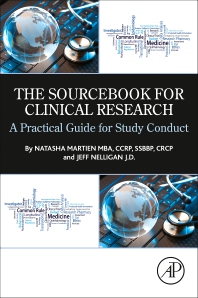
  • The Sourcebook for Clinical Research

    A Practical Guide for Study Conduct
    • 1st Edition
    • Jeff Nelligan + 1 more
    • English
    A single trial is complex, with numerous regulations, administrative processes, medical procedures, deadlines and specific protocol instructions to follow. And yet, there has existed no single-volume, comprehensive clinical research reference manual for investigators, medical institutions, and national and international research personnel to keep on the shelf as a ready reference to navigate through trial complexities and ensure compliance with U.S. Federal Regulations and ICH GCP until The Sourcebook for Clinical Research. An actionable, step-by-step guide through beginning to advanced topics in clinical research with forms, templates and checklists to download from a companion website, so that study teams will be compliant and will find all the necessary tools within this book. Additionally, the authors developed Display Posters for Adverse Events Plus Reporting and Medicare Coverage Analysis that can be purchased separately here: https://www.elsevier... Moreover, The Sourcebook for Clinical Research contains clear information and guidance on the newest changes in the industry to keep seasoned investigators and staff current and compliant, in addition to providing detailed information regarding the most complex topics. This book serves as a quick, actionable, off-the-shelf resource to keep by your side at the medical clinic.
  • Managing Quality of Fruit and Vegetables

    • 1st Edition
    • Umezuruike Linus Opara
    • English
    Managing Quality of Fruit and Vegetables covers the application of proven and novel industrial approaches to quality management of fresh produce that have become common practice among local and global fresh produce chains while also covering the latest postharvest technologies for maintaining quality and safety. In addition, it addresses the impacts of emerging global challenges, such as climate change, the role of fruit and vegetables on nutrition security, and the development of future postharvest technologies to maintain quality and safety. Both academics and post-graduate students studying fresh produce supply chains and industry professionals will find this book extremely useful.Split into three broad themes, the book brings to light the latest developments on the biochemical and physiological basis for the quality of fruit and vegetables, the industrial approaches to quality management of fruit and vegetables, and the latest advances in postharvest technologies for controlling and maintaining quality.
  • Biological Emerging Risks in Foods

    • 1st Edition
    • Volume 86
    • English
    Biological Emerging Risks in Foods, Volume 86, addresses the emerging biological risks in food from a global context. Specific sections in this new release include discussions on parasites in foods as an emerging issue and antimicrobial resistance in the food chain. Specific chapters cover Norovirus: the burden of the unknown, Hepatitis E virus: a new foodborne zoonotic concern, Parasites in foods: from a neglected position to an emerging issue, Antimicrobial resistance in the food chain: an emerging global concern, Salmonella in foods: a reemerging problem, Listeria monocytogenes in foods, and Campylobacter in the food chain.
  • Fundamentals of Congenital Minimally Invasive Cardiac Surgery

    • 1st Edition
    • Vladimiro Vida + 1 more
    • English
    Fundamentals of Congenital Minimally Invasive Cardiac Surgery is a first of its kind, fully-illustrated guide that is solely dedicated to the most diffused congenital minimally invasive cardiac surgery procedures. It provides detailed, step-by-step descriptions of surgical maneuvers to underline each aspect of the procedures along with full color drawings and operative pictures to enhance understanding. Each chapter fully describes the preoperative setting, the needed materials and the required technical skills that make specific congenital heart defects amenable to minimally invasive surgical treatment. This is the perfect go-to reference for pediatric and congenital cardiac surgeons, and is also a must-have guide for residents in cardiac surgery who are looking to review the technical aspects and outcomes of utilizing a minimally invasive approach for cardiac surgery.